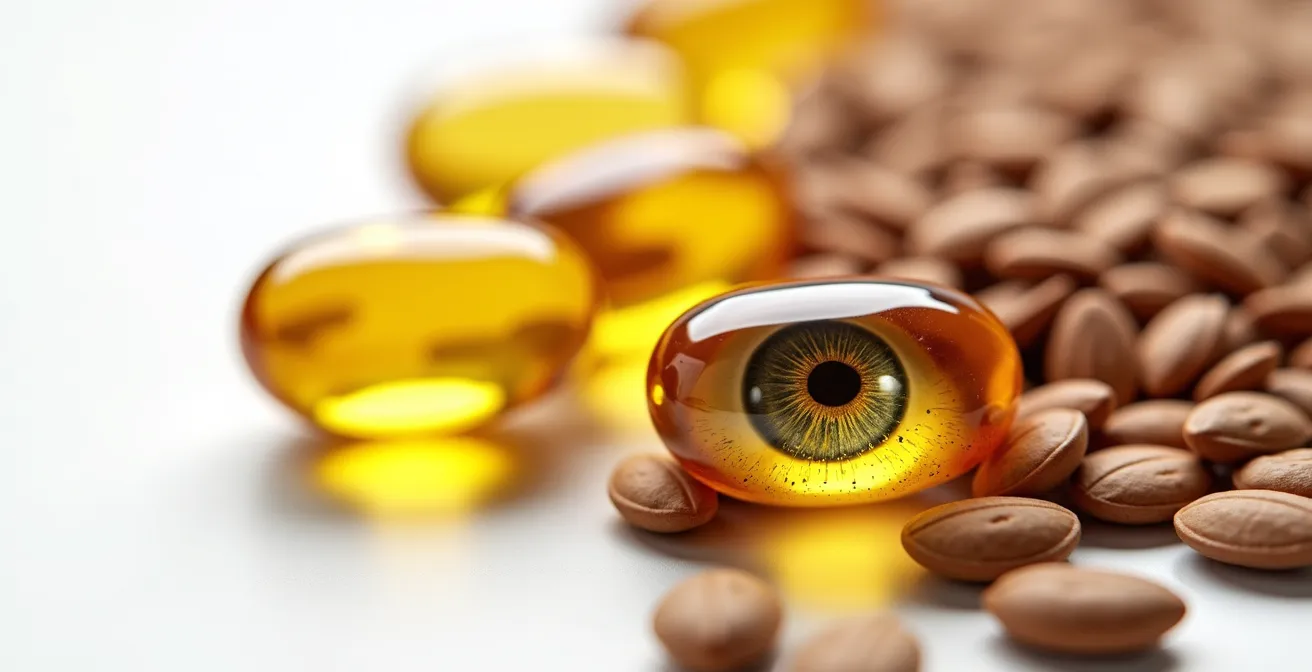
For vegans with dry eye, simply increasing flaxseed intake is an inefficient strategy; the key is bypassing the body’s poor conversion process with a direct, plant-based source of EPA and DHA.
- The primary cause of most dry eye is meibomian gland dysfunction (MGD), which requires EPA and DHA fatty acids—not the ALA found in flax—to produce healthy tear oil.
- Your body converts only a tiny fraction of plant-based ALA (from flax, chia, walnuts) into the usable EPA and DHA needed for ocular health.
Recommendation: Prioritize a high-quality, third-party tested algal oil supplement, as it provides a direct, vegan source of pre-formed EPA and DHA to effectively address evaporative dry eye.
If you follow a vegan or vegetarian diet and suffer from the gritty, burning sensation of dry eye, you’ve likely been given a common piece of advice: “Just take flaxseed oil.” It seems logical. Flaxseed is one of the richest plant-based sources of omega-3 fatty acids, the very nutrients often recommended for eye health. Yet, many who diligently add flax to their smoothies and salads find little to no relief. This frustrating experience isn’t a failure on your part; it’s a consequence of a crucial biochemical detail that is often overlooked in mainstream health advice.
The conversation around omega-3 for eye health is dominated by fish oil, which is rich in the long-chain fatty acids Eicosapentaenoic Acid (EPA) and Docosahexaenoic Acid (DHA). Plant sources like flax, chia, and walnuts, however, contain a different, shorter-chain omega-3 called Alpha-Linolenic Acid (ALA). The core of the issue lies in the body’s limited ability to convert ALA into the EPA and DHA that your eyes—specifically your meibomian glands—desperately need to function correctly. This inefficiency creates a nutritional bottleneck, leaving many plant-based eaters without the tools to combat their symptoms effectively.
But what if the solution wasn’t to consume more and more ALA, hoping for a different outcome? What if the key was to bypass this conversion process entirely? This guide moves beyond the flaxseed-versus-fish-oil debate to provide a clear, evidence-based pathway for vegans and vegetarians. We will dissect the science behind why your oil glands need specific fats, explain the critical difference between omega-3 sources, and reveal the effective, marine-free alternative that can truly support your ocular health from within.
This article will guide you through the essential knowledge needed to make an informed decision. You will learn to identify the root cause of your dryness, understand what to look for on a supplement label, and navigate conflicting scientific evidence to find a nutritional strategy that finally works for your lifestyle.
Summary: A Biochemist’s Vegan Guide to Omega-3 for Dry Eye
- Why Meibomian Glands Need High-Quality Fats to Function?
- How to Find the EPA/DHA Ratio on Your Omega-3 Bottle?
- Triglyceride Form or Ethyl Ester: Which Absorbs Better for Eye Health?
- The Blood Thinning Risk: When to Stop Omega-3 Before Eye Surgery
- Problem & Solution: Taking Omega-3 With Fat to Stop “Fish Burps”
- How to Incorporate Lutein and Zeaxanthin Into a Vegan Diet?
- Oil Glands or Tear Ducts: Which Is the Root of Your Dryness?
- AREDS2 Supplements or Kale Salad: Which Is Better for Early AMD?
Why Meibomian Glands Need High-Quality Fats to Function?
To understand why some omega-3s work for dry eye while others fall short, we must first look at the anatomy of your tear film. For most sufferers, dry eye isn’t about a lack of tears; it’s about the poor quality of those tears. Your eyelids are lined with tiny, specialized glands called meibomian glands. Their job is to secrete a high-quality oil (meibum) that forms the outermost layer of your tear film. This lipid layer is crucial; it acts like a seal, preventing the watery (aqueous) layer of your tears from evaporating too quickly.
When these glands become blocked or fail to produce oil of the right consistency, the condition is known as Meibomian Gland Dysfunction (MGD). Without a stable oil layer, your tears evaporate rapidly, leaving the eye’s surface exposed and leading to the classic symptoms of burning, grittiness, and irritation. The scale of this problem is significant; a comprehensive review confirms that 86% of dry eye patients have signs of meibomian gland dysfunction. This means that for the vast majority, the root cause is an oil problem, not a water problem.
The quality of the meibum is directly influenced by the composition of fatty acids available in your diet. The oils produced by these glands need to be fluid and clear to flow easily. The long-chain omega-3 fatty acids, EPA and DHA, play a vital role here. They are incorporated into the meibum, helping to lower its melting point and improve its fluidity. This ensures the oil spreads evenly across the eye and effectively protects the tear film. Research supports this link, with a meta-analysis showing that omega-3 supplementation has a positive protective effect on MGD, significantly improving tear stability compared to placebo.
How to Find the EPA/DHA Ratio on Your Omega-3 Bottle?
Once you understand the importance of EPA and DHA, navigating the supplement aisle becomes a new challenge. The front of a bottle might boldly state “1200 mg Omega-3,” but this number is often misleading. It typically refers to the total amount of oil in the capsule, not the amount of the active, beneficial fats. To find the true value of a supplement, you must ignore the front label and turn the bottle over to the “Supplement Facts” panel.
Here, you need to look for two specific line items: EPA (Eicosapentaenoic Acid) and DHA (Docosahexaenoic Acid). These are the powerhouse compounds your meibomian glands require. Add the milligrams (mg) of EPA and DHA together to get the total active omega-3 dose per serving. For example, a capsule containing 1200 mg of total fish or algal oil might only provide 300 mg of EPA and 200 mg of DHA, for a combined total of 500 mg of active omega-3s. The remaining 700 mg is just other fats, which offer no specific benefit for dry eye.
This distinction is crucial for both efficacy and cost-effectiveness. A cheaper bottle may seem like a good deal, but if its EPA/DHA concentration is low, you’ll need to take many more capsules to reach a therapeutic dose, ultimately costing you more. Calculating the cost per gram of active ingredients is the best way to compare products fairly.
Your Action Plan: Calculate the True Cost of Your Omega-3
- Identify Active Ingredients: On the “Supplement Facts” panel, find the specific amounts listed for EPA and DHA per serving. Add these two numbers together.
- Calculate Total Potency: Multiply the combined EPA+DHA per serving by the total number of servings listed on the bottle. This gives you the total active omega-3 content in the entire product.
- Determine Cost Per Gram: Divide the total price of the bottle by the total grams of combined EPA+DHA you just calculated. (Note: 1000 mg = 1 gram).
Triglyceride Form or Ethyl Ester: Which Absorbs Better for Eye Health?
Beyond the dosage of EPA and DHA, another critical factor determines how much of these beneficial fats your body can actually use: their molecular form. Omega-3 supplements primarily come in two forms: the natural triglyceride (TG) form and the processed ethyl ester (EE) form. This distinction, while sounding technical, has significant implications for absorption and, ultimately, for your eye health.
In nature, whether in fish or algae, omega-3 fatty acids are bound to a glycerol backbone, creating a triglyceride molecule. This is the form your body is designed to recognize and digest. However, to concentrate EPA and DHA during manufacturing, this natural bond is often broken, and the fatty acids are attached to an ethanol (alcohol) molecule, creating an ethyl ester. Many mass-market supplements are sold in this cheaper, semi-synthetic EE form.
The problem is that your body absorbs ethyl esters far less efficiently. Before they can be used, your digestive system must first break the ethanol bond and then re-attach the fatty acid to a glycerol backbone. This extra step is inefficient and results in a significant portion of the omega-3 being lost. In contrast, the natural TG form is readily absorbed. Some premium supplements go a step further, using a re-esterified triglyceride (rTG) form. Here, the concentrated oil is converted back to the superior triglyceride structure, offering both high potency and high bioavailability. Clinical studies confirm that this rTG omega-3 form is absorbed up to three times better than the standard ethyl ester fish oils commonly found in stores.
For someone seeking relief from dry eye, choosing a highly absorbable form is non-negotiable. Opting for a cheaper EE supplement may mean that even with a high stated dose, very little of the active EPA and DHA actually reaches your meibomian glands. Prioritizing a TG or, ideally, an rTG form ensures you get the maximum benefit from every capsule.
The Blood Thinning Risk: When to Stop Omega-3 Before Eye Surgery
While omega-3 fatty acids offer significant benefits for ocular surface health, they also possess a well-known systemic effect: they can act as a mild blood thinner. EPA and DHA work by reducing the production of certain inflammatory molecules and inhibiting platelet aggregation, which is the process by which blood cells clump together to form clots. This property is beneficial for cardiovascular health but requires careful consideration if you are planning any type of surgery, especially eye surgery.
Procedures like cataract surgery, LASIK, or glaucoma surgery involve making incisions in the highly vascularized tissues of the eye. An increased bleeding tendency, even a mild one, can complicate the procedure and affect healing. For this reason, surgeons almost always advise patients to discontinue supplements known to affect blood clotting in the days or weeks leading up to an operation.
The standard recommendation is to stop taking high-dose omega-3 supplements, as well as other common supplements with similar effects like Vitamin E, ginkgo biloba, and garlic, approximately 7 to 10 days before surgery. However, this is not a one-size-fits-all rule. The exact timing depends on the specific type of surgery, your individual health profile, and the dosage of the supplements you are taking. It is absolutely essential to have a transparent conversation with your surgeon and anesthesiologist. You must provide them with a complete list of all supplements and medications you take so they can give you personalized instructions.
This precautionary measure is temporary and is designed to ensure the safety and success of your surgical outcome. Once your surgeon gives you clearance after the procedure, you can typically resume your supplement regimen to continue supporting your long-term eye health.
Problem & Solution: Taking Omega-3 With Fat to Stop “Fish Burps”
One of the most common complaints associated with omega-3 supplements is the unpleasant aftertaste or the notorious “fish burps.” While often associated with fish oil, this issue can also occur with vegan algal oil supplements. This side effect, known as reflux, happens when the oil floats on top of the stomach contents and the burp releases fishy-smelling vapors. It’s not just unpleasant; it can be a sign of poor digestion or oil rancidity.
The primary reason for this reflux is that oil and water (the primary component of stomach acid) don’t mix. The oil sits on top, and if it’s not emulsified and digested quickly, it can cause discomfort. Furthermore, some lower-quality supplements may already be partially oxidized (rancid) in the capsule, which significantly worsens the taste and smell. As some clinical observations note, certain processing methods can make supplements less absorbable and more likely to cause these burps.
Fortunately, there are several effective strategies to prevent this issue and improve digestion:
- Take with a fatty meal: Consuming your omega-3 capsule with a meal that contains other healthy fats (like avocado, nuts, or olive oil) is the most effective solution. The presence of dietary fat stimulates the release of lipase, the enzyme responsible for breaking down fats, ensuring the supplement is digested properly rather than floating in the stomach.
- Freeze the capsules: For some people, freezing the softgels can help. This slows their dissolution, allowing them to pass through the stomach and begin breaking down further down in the digestive tract, reducing the chance of reflux.
- Choose enteric-coated formulas: These capsules are designed with a special coating that prevents them from dissolving in the stomach’s acid. They travel intact to the small intestine, where they are broken down and absorbed without causing burps.
- Split your dose: Instead of taking a large dose all at once, divide it between two meals, such as morning and evening. This reduces the amount of oil your stomach has to process at one time.
- Check for freshness: Opt for high-quality brands that test for oxidation levels (often indicated by a “TOTOX” value) to ensure you are consuming a fresh, non-rancid product.
How to Incorporate Lutein and Zeaxanthin Into a Vegan Diet?
For those on a vegan diet, sourcing certain eye-healthy nutrients is remarkably easy. The vital carotenoids lutein and zeaxanthin, which protect the macula from blue light damage and oxidative stress, are abundant in plant foods. Leafy greens like kale and spinach, as well as corn, bell peppers, and broccoli, are excellent sources, making it straightforward to meet daily requirements through diet alone.
However, this dietary advantage for carotenoids often creates a false sense of security regarding another critical nutrient for eye health: omega-3. While a vegan diet is rich in the omega-3 fatty acid ALA from sources like flaxseed, chia seeds, and walnuts, it presents a significant challenge for obtaining the EPA and DHA crucial for combating dry eye. The common advice to simply rely on these ALA sources overlooks a key biochemical bottleneck. Your body must convert ALA into the longer-chain EPA and DHA, and this process is extremely inefficient. In fact, as Harvard Health explains, typically only a small fraction of the ALA you consume is converted into the forms your eyes can actually use.
The table below illustrates just how little of the ALA from common plant sources becomes the DHA needed to support meibum quality. This demonstrates that relying on flaxseed oil or chia seeds, while healthy for other reasons, is not a direct or effective strategy for addressing MGD-related dry eye.
| Source | ALA Content | EPA Conversion Rate | DHA Conversion Rate |
|---|---|---|---|
| Ground Flaxseed (1 tbsp) | 2g | 5-8% | 0.5% |
| Flaxseed Oil (1 tbsp) | 7.26g | 5-8% | 0.5% |
| Chia Seeds (1 oz) | 17.8g | 5-8% | 0.5% |
| Walnuts (1 oz) | 2.5g | 5-8% | 0.5% |
The solution for vegans is not to abandon these healthy foods, but to supplement them with a direct source of EPA and DHA. Fortunately, such a source exists: algal oil. The microalgae that fish consume are the original producers of EPA and DHA. By going straight to the source, algal oil supplements provide a potent, clean, and sustainable way for vegans to get the specific long-chain omega-3s needed for ocular health without any marine animal input.
Oil Glands or Tear Ducts: Which Is the Root of Your Dryness?
To find an effective treatment for dry eye, it’s crucial to first identify its underlying cause. Dry eye disease is broadly categorized into two types: aqueous deficient and evaporative. While they can coexist, one type is usually dominant.
Aqueous Deficient Dry Eye (ADDE) is what most people traditionally think of as “dry eye.” It occurs when the lacrimal glands (tear ducts) do not produce enough of the watery component of the tears. This is less common and is often associated with autoimmune conditions like Sjögren’s syndrome, rheumatoid arthritis, or age-related changes in the glands.
Evaporative Dry Eye (EDE), on the other hand, is far more prevalent. As mentioned earlier, this is caused by Meibomian Gland Dysfunction (MGD), where a deficient oil layer allows tears to evaporate from the eye’s surface too quickly. Modern life contributes heavily to this condition; prolonged screen use, for example, leads to a significantly reduced blink rate, which means the meibum isn’t being spread across the eye frequently enough. The evidence is clear: research confirms that over 85% of dry eye cases are primarily evaporative in nature. This means for the vast majority of people, the problem lies with the oil glands, not the tear ducts.
You can often get a clue as to which type you have by observing your symptoms. Does the gritty, burning feeling get worse when you’re reading, driving, or using a computer? This points strongly toward EDE, as these focus-intensive activities reduce your blink rate. Do your eyes sometimes water excessively? Paradoxically, this “watery dry eye” is also a classic sign of EDE; your eyes are overproducing tears in a desperate attempt to compensate for the rapid evaporation. In contrast, a constant, sandpaper-like feeling of dryness that doesn’t fluctuate much with activity may suggest an aqueous deficiency. An eye care professional can perform specific tests, like measuring tear break-up time or imaging the meibomian glands, to give a definitive diagnosis.
Key Takeaways
- The vast majority of dry eye cases are caused by Meibomian Gland Dysfunction (MGD), an “oil problem” where tears evaporate too quickly, not a “water problem” of insufficient tear production.
- Plant-based ALA omega-3 from sources like flax and chia seeds is not an effective treatment for MGD because the body’s conversion rate to the necessary EPA and DHA is extremely low.
- For vegans, the most effective strategy is to bypass this conversion bottleneck by using a direct, pre-formed source of EPA and DHA, such as a high-quality algal oil supplement.
AREDS2 Supplements or Kale Salad: Which Is Better for Early AMD?
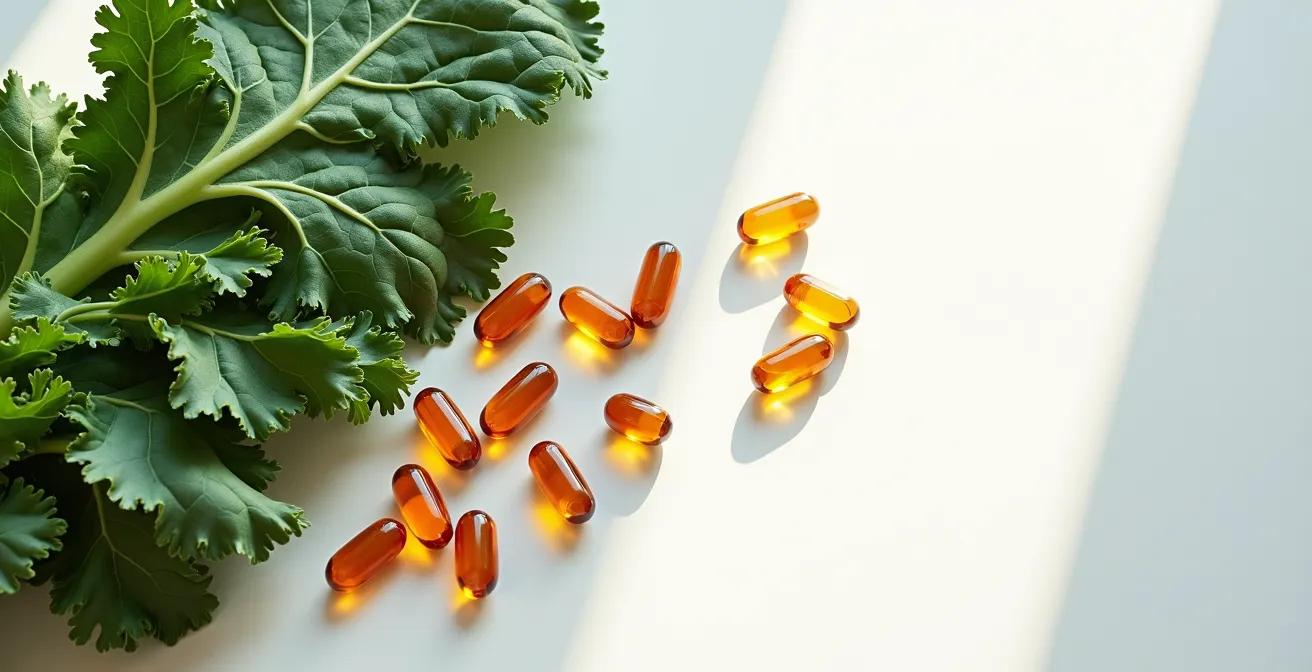
The debate between whole foods and supplements is a constant in nutritional science. For age-related macular degeneration (AMD), this is framed as the “AREDS2 supplement versus a kale salad” question. The AREDS2 formula provides a high-dose cocktail of specific nutrients (like lutein, zeaxanthin, and zinc) proven to slow the progression of intermediate to advanced AMD. A kale salad provides those same nutrients, but in a complex, whole-food matrix. For early AMD, most experts agree a nutrient-rich diet is the first and most important step.
This “food vs. pill” debate becomes even more nuanced when we look at omega-3s for dry eye. The scientific literature can seem contradictory. For years, omega-3s were widely recommended by doctors. Then, a major study cast doubt on their efficacy. This highlights a critical point: not all supplements are created equal, and the details of the science matter immensely. For instance, the large, NIH-funded DREAM study was widely reported as showing omega-3s were ineffective for dry eye. As the lead investigator stated:
Our study does not support use of omega-3 supplements for patients with moderate to severe dry eye disease. We found that patients who received 3,000 mg of omega-3 for 12 months were not significantly better than patients who received an olive oil placebo.
– Dr. Penny A. Asbell, DREAM Study Results, NIH MedlinePlus Magazine
This result led many to dismiss omega-3s entirely. However, a closer look reveals that the study used a lower-quality ethyl ester (EE) form of omega-3 and an olive oil placebo that is not truly inert. More recent and specific research focusing on higher-quality supplement forms tells a different story.
Case Study: The Impact of High-Quality rTG Omega-3
A 2024 double-masked, multi-center trial in Korea investigated the effects of a high-quality, re-esterified triglyceride (rTG) omega-3 supplement on patients with MGD-associated dry eye. Participants received a daily dose of 1680mg EPA and 560mg DHA. Unlike the DREAM study, the results were definitively positive. The group receiving the rTG omega-3 showed significant improvements in tear film stability, meibomian gland function, and overall dry eye symptoms compared to the placebo group. This suggests that the *form* and *bioavailability* of the omega-3 are paramount for achieving a clinical effect.
For a vegan struggling with dry eye, this is the crucial takeaway. The question is not simply “should I take an omega-3 supplement?” but rather “which specific type of omega-3 supplement is proven effective?” The evidence points strongly toward a high-potency, highly-absorbable rTG form, sourced from algal oil.
Frequently Asked Questions About Omega-3 and Dry Eye
Does your dryness worsen when reading or using screens?
If yes, this points to evaporative dry eye from oil gland dysfunction, as reduced blinking during these activities increases tear evaporation.
Do your eyes sometimes water excessively?
Paradoxically, excessive watering often indicates oil gland problems, as your eyes overproduce tears to compensate for rapid evaporation.
Is the dryness constant throughout the day?
Constant sandpaper-like dryness suggests aqueous deficiency (a tear duct problem) rather than the more common evaporative dry eye.
How long before surgery should I stop taking omega-3 supplements?
This varies by surgery type and dosage. For incisional eye surgeries like cataract surgery or LASIK, most surgeons recommend stopping 7-10 days prior, but you must always confirm this timeline with your specific surgeon.
Does the blood-thinning risk apply to all eye procedures?
The risk is most relevant for incisional surgeries. Non-invasive procedures like a routine eye exam typically carry no concern, but it’s always best to disclose all supplements to your doctor.
Should I also stop other supplements like Vitamin E?
Yes. It is critical to inform your surgeon about all supplements you take, as Vitamin E, ginkgo, garlic, and others can also affect blood clotting and healing.