
The best vision strategy for a 12-hour shift isn’t choosing between glasses or contacts—it’s building a hybrid system that uses both.
- Glasses with specialized coatings are ideal for prolonged, static tasks like screen work to reduce digital eye strain.
- Modern contact lenses (especially daily disposables) offer superior mobility and peripheral vision for active, on-the-move portions of your day.
Recommendation: Alternate between glasses and contacts based on your task to significantly improve comfort, reduce end-of-day fatigue, and maintain long-term eye health.
The feeling is all too familiar for busy professionals: the clock strikes the tenth hour of your shift, and your eyes feel sandy, tired, and unfocused. Whether you’re a nurse monitoring patients, a developer deep in code, or a driver navigating nighttime roads, visual fatigue can cripple your productivity and well-being. The default debate often pits glasses against contact lenses in a simple face-off, listing generic pros and cons about convenience versus comfort. This conversation typically revolves around simple lifestyle choices, touching on activities like sports or dealing with weather, but it fails to address the unique endurance demands of a 12-hour workday.
Most advice overlooks the core issue: no single vision solution is perfect for every situation you encounter during a long and varied shift. Sticking to one option—either glasses or contacts—for the entire duration is a recipe for discomfort. But what if the solution wasn’t an “either/or” choice? What if the key to all-day visual comfort and peak performance lies not in picking a winner, but in building a strategic, hybrid vision system? This approach treats glasses and contacts as specialized tools in your optical toolkit, each deployed for the task it handles best.
This guide will deconstruct the challenges of all-day vision correction and provide a practical framework for combining these tools. We will explore why your glasses might be causing screen fatigue, how to transition to contacts without irritation, and the true long-term costs. By the end, you will have a clear roadmap to design a personalized vision strategy that keeps you sharp and comfortable from the beginning of your shift to the very end.
This article provides a structured comparison to help you build the optimal vision strategy for your demanding schedule. Explore the sections below to understand the critical factors at play.
Summary: Glasses or Contacts for a 12-Hour Shift?
- Why Your Current Glasses Cause Fatigue After 4 Hours of Screen Time?
- How to Switch From Glasses to Contacts Without Irritation in 3 Steps?
- Daily Disposables vs. High-Index Glasses: Which Costs Less Over 2 Years?
- The Dry Eye Mistake That Ruins Contact Lens Comfort for 60% of Users
- Problem & Solution: Combining Contacts and Blue Light Glasses for Gamers
- 1.67 or 1.74 Index: Which Is Necessary for a -6.00 Prescription?
- Why Silicone Hydrogel Allow for Longer Wear Times Than Older Materials?
- How Often Should You Get an Eye Exam if You Have 20/20 Vision?
Why Your Current Glasses Cause Fatigue After 4 Hours of Screen Time?
While glasses are a reliable tool, they can become a primary source of fatigue during long periods of focused, near-distance work. This phenomenon, often called digital eye strain or computer vision syndrome (CVS), arises from a few key factors. First, your eyes’ focusing system (accommodation) is held in a state of constant tension to maintain a clear image of the screen. This sustained muscular effort is like holding a weight for hours—it inevitably leads to strain, headaches, and blurred vision. Glasses lock you into a single, fixed focal distance, offering no relief for this system.
Furthermore, the physical characteristics of your glasses can contribute to the problem. Improper frame fit, specifically the pantoscopic tilt (the angle of the lenses in relation to your face), can introduce optical distortions that your brain must work harder to correct. An incorrect tilt, which should ideally be between 8-12 degrees, can induce unwanted astigmatism and prismatic effects. Additionally, standard lenses without an anti-reflective coating create glare and reflections from overhead lighting and the screen itself, forcing your eyes to constantly adjust and leading to visual “noise” and fatigue.
The solution isn’t to abandon glasses, but to optimize them for the task. Computer-specific glasses with a prescription tailored for screen distance and a high-quality anti-reflective coating can make a world of difference. Implementing behavioral changes is equally important for managing this situational fatigue.
Action Plan: Reducing Screen-Related Eye Strain
- Position your monitor at arm’s length and ensure the top of the screen is slightly below eye level to promote a natural neck posture.
- Apply the 20-20-20 rule: every 20 minutes, take a 20-second break to look at something at least 20 feet away to relax your focusing muscles.
- Adjust your screen’s brightness and contrast to match the ambient lighting in your room, avoiding a stark difference that forces your pupils to work harder.
- Verify the fit of your frames, ensuring a proper pantoscopic tilt of 8-12 degrees to minimize optical distortions.
- Invest in computer-specific glasses with a high-quality anti-reflective coating to eliminate distracting glare and reflections.
How to Switch From Glasses to Contacts Without Irritation in 3 Steps?
Transitioning from glasses to contact lenses opens up a new level of freedom, especially for the active parts of a professional’s day. Contacts offer unobstructed peripheral vision—critical for a nurse scanning a room or a driver checking blind spots—and eliminate the annoyances of rain, fog, or frames slipping down your nose. However, a successful switch hinges on a careful adaptation process to avoid the common pitfalls of irritation and discomfort. The key is a gradual introduction and meticulous hygiene, not an abrupt all-day plunge.
The first step is a professional fitting. A contact lens prescription is different from a glasses prescription; it requires specific measurements of your cornea’s curvature and a tear film evaluation to select the right material and size. Your optometrist will provide a trial pair and teach you the proper insertion and removal technique. Proper hygiene is non-negotiable from day one: always wash and dry your hands thoroughly before touching your lenses or your eyes. This simple act is the single most effective way to prevent infection.
The second step is a gradual wear schedule. Don’t immediately aim for a 12-hour day. Start with 4 hours on the first day, then increase wear time by 1-2 hours each subsequent day, as long as your eyes feel comfortable. This allows your corneas to adapt to the new environment. The third and final step is building your hybrid system, as illustrated by professionals in high-stakes environments.
Case Study: An EMT’s Hybrid Strategy for 24-Hour Shifts
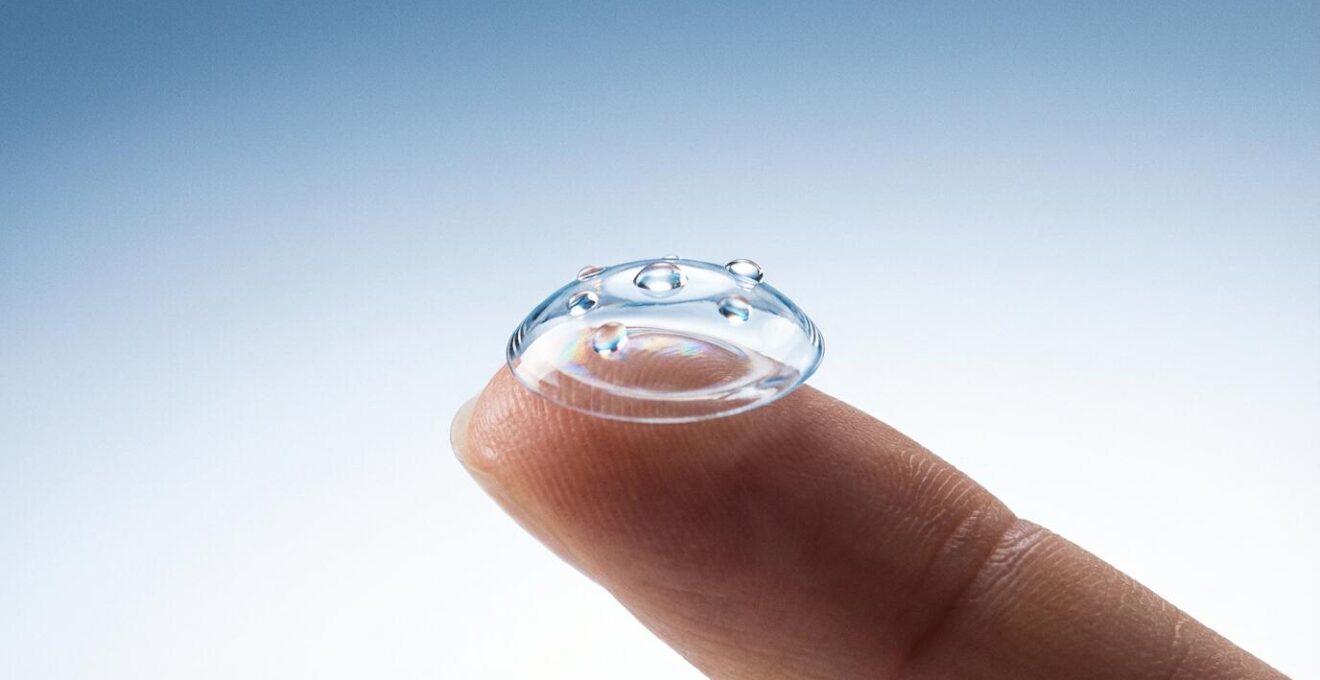
Emergency medical technicians working grueling 24-hour shifts have developed effective hybrid strategies. Many wear glasses for the less active, overnight portions of their shift (often 12+ hours) to give their eyes a rest. They then switch to daily disposable contacts for the high-intensity daytime portion, ensuring maximum mobility and visual field. This approach leverages the strengths of each tool, using contacts for performance and glasses for recovery, proving the effectiveness of a planned, situational approach to vision correction.
Daily Disposables vs. High-Index Glasses: Which Costs Less Over 2 Years?
When building a hybrid vision system, cost is a practical consideration. It’s not a simple one-to-one comparison, as an effective system for a 12-hour professional often requires both. The analysis should focus on the total cost of ownership over a typical two-year prescription cycle. Daily disposable contacts, a popular choice for their convenience and hygiene, carry a higher recurring cost. In contrast, high-index glasses represent a significant one-time investment.
The financial breakdown reveals distinct patterns. Daily disposables eliminate the need for cleaning solutions but require a continuous supply. A person wearing them five days a week will have a significant annual expense. Conversely, a quality pair of high-index glasses can last for years if the prescription remains stable, with minimal ongoing costs. However, every contact lens wearer needs a reliable pair of backup glasses, adding a mandatory upfront investment to the contact lens side of the equation. This is a critical and often overlooked expense in a direct comparison.
While a pair of high-index glasses might seem expensive initially, its cost can escalate quickly. An analysis shows that while basic frames are affordable, designer frames or premium lenses can push the price to $800-$1500. The following table provides a clearer picture of the expected two-year expenditure for each primary component of your vision toolkit.
| Cost Factor | Daily Disposable Contacts | High-Index Glasses (1.67) |
|---|---|---|
| Initial Investment | $150 (3-month supply) | $200-$600 |
| Annual Replacement | $600-$1000 | $0 (if prescription stable) |
| Solutions & Care | $0 (disposables) | $20 (cleaning supplies) |
| Backup Glasses | $200 (required) | N/A |
| 2-Year Total | $1400-$2200 | $220-$620 |
The Dry Eye Mistake That Ruins Contact Lens Comfort for 60% of Users
The single greatest barrier to comfortable, all-day contact lens wear is dry eye. Even for individuals who don’t normally experience dryness, the act of wearing contacts can induce or exacerbate symptoms, especially during long hours of focused work. As the All About Vision Editorial Team notes, “If you work at a computer often or spend long periods focusing, wearing contacts can contribute to symptoms of eye strain.” The core mistake many users make is underestimating the impact of their environment and behavior on their tear film.
A contact lens is a foreign object that sits on your cornea, subtly disrupting the natural spread of tears with every blink. During intense focus on a screen, your blink rate can drop by up to 50%. Fewer blinks mean less tear distribution, causing the lens surface to dry out and leading to that gritty, burning sensation. This problem is compounded by low-humidity environments like air-conditioned offices or heated cars, which accelerate tear evaporation. Relying solely on standard rewetting drops, especially those with preservatives, can sometimes worsen the problem in the long run.
Preventing this comfort-killer requires a proactive, multi-faceted approach. It’s about managing your body’s hydration, improving the quality of your tear film from the inside out, and adopting smart lens-care habits. Simple environmental adjustments and choosing the right type of lens and rewetting drops can transform your experience from one of endurance to one of effortless comfort, even at the end of a 12-hour shift.
To maintain comfort, consider these essential practices:
- Stay hydrated by drinking at least 8 glasses of water daily to support tear production.
- Use preservative-free rewetting drops, which are gentler on the eye and ideal for frequent use.
- Even with “no-rub” solutions, always physically rub your lenses during cleaning to remove protein deposits.
- Consider switching to daily disposables to start with a fresh, clean lens every day, eliminating deposit buildup.
- Give your eyes a break by switching back to glasses for the last few hours of your day or during low-activity periods.
Problem & Solution: Combining Contacts and Blue Light Glasses for Gamers
For professionals whose work (or relaxation) involves intense, prolonged screen time—like developers, designers, or avid gamers—a more advanced hybrid strategy is needed. The problem is twofold: contact lenses can exacerbate dry eye during long focus periods, and they offer no protection against high-energy visible (HEV) or “blue” light emitted by screens. This light is linked to digital eye strain and potential disruption of sleep cycles.
While some contact lenses with UV protection exist, their blue light filtering capabilities are generally minimal. This leaves a critical gap in protection for the most visually demanding tasks. The simple solution is to layer your vision tools. This involves wearing your standard contact lenses for clear distance vision and then adding a pair of non-prescription (plano) blue light filtering glasses over them during screen time. This “stacking” approach provides the best of both worlds: the full field of view from contacts and the targeted protection of specialized glasses.
This strategy directly addresses the limitations of each individual tool. As research highlights, contact lenses reduce the amount of oxygen reaching the eyes, which can worsen dry eye symptoms during intense focus. By using glasses for these periods, you are not only filtering blue light but also giving your corneas a chance to breathe. This hybrid approach is a powerful way to mitigate the cumulative strain of a long digital day.
Hybrid Vision Strategy for Digital Workers
A common strategy among digital professionals is to alternate between vision tools based on the task at hand. They wear contact lenses for general mobility, meetings, and collaborative work where a wide field of view is beneficial. However, for long, solitary sessions of coding or design work, they switch to dedicated computer glasses. These glasses not only filter blue light but are often prescribed with a slightly modified power optimized for their specific screen distance, further reducing accommodative stress and proving the benefit of a task-specific optical solution.
1.67 or 1.74 Index: Which Is Necessary for a -6.00 Prescription?
For professionals with a strong prescription (typically -4.00 diopters or higher), the choice of lens material for their glasses is not just about aesthetics—it’s about all-day comfort and optical clarity. High-index lenses are designed to be thinner and lighter than standard plastic lenses, a critical feature for a -6.00 prescription, which can otherwise result in thick, heavy “coke bottle” lenses. The main contenders are 1.67 and 1.74 high-index materials.
A 1.67 index lens is often the sweet spot for a -6.00 prescription. It offers a significant reduction in thickness (around 40% thinner than standard) and weight, dramatically improving comfort for all-day wear. Crucially, it has a better Abbe value (around 32) compared to 1.74. A higher Abbe value means less chromatic aberration—the distracting color fringing that can appear around high-contrast objects—resulting in clearer, sharper vision, which is vital for reducing eye strain over a 12-hour shift.
A 1.74 index lens, the thinnest plastic lens available, offers a marginal additional thickness reduction (up to 50% thinner than standard) but at a significant cost premium and a drop in optical clarity (Abbe value around 28). For a -6.00 prescription, the extra thinness is often not noticeable enough to justify the increased price and potential for more visual distortions. As experts at Real Eyes Optometry note in a discussion on prescription differences, The National Academy of Opticianry teaches that powers stronger than 4.00 diopters in either meridian usually need compensation, and powers of 6.00 or more always do, highlighting the need for careful material selection.
| Feature | 1.67 Index | 1.74 Index |
|---|---|---|
| Thickness Reduction | 40% thinner than standard | 50% thinner than standard |
| Abbe Value (clarity) | 32 (better) | 28 (more chromatic aberration) |
| Weight | Moderate reduction | Marginal additional reduction |
| Price Premium | +$100-150 | +$200-300 |
| Best Frame Type | Smaller, rounder frames | Any frame style |
| 12-Hour Comfort | Excellent | Good (may notice aberrations) |
Why Silicone Hydrogel Allow for Longer Wear Times Than Older Materials?
The ability to comfortably wear contact lenses for a full 12-hour shift and beyond is a relatively recent innovation, driven almost entirely by the development of silicone hydrogel materials. Unlike older hydrogel lenses, which were essentially water-loving plastics, silicone hydrogel incorporates silicone, a material known for its exceptional oxygen permeability. This single property revolutionized contact lens technology.
Your cornea has no blood vessels; it gets most of its oxygen directly from the atmosphere. An older hydrogel lens acted as a barrier, with oxygen delivery dependent on the water content of the lens. As the lens dried out during the day, oxygen permeability would plummet, leading to corneal stress, swelling (edema), and that tell-tale end-of-day discomfort and redness. This is why older lenses had much shorter recommended wear times.
Silicone hydrogel creates a microscopic network of channels that allows oxygen to pass directly through the lens material to the cornea, independent of the water content. This results in up to five times more oxygen transmission than traditional hydrogel lenses. This dramatically improved oxygen supply keeps the cornea healthier, reduces redness and irritation, and is the primary reason why wearers can now comfortably and safely wear lenses for 12, 14, or even more hours. In fact, some specially designed, FDA-approved silicone hydrogel lenses are suitable for continuous wear for up to 30 days, a testament to their superior breathability.
Key Takeaways
- The goal is not to choose one winner, but to build a flexible “Hybrid Vision System” using both glasses and contacts.
- Use contacts for mobility and a wide field of view; use optimized glasses for static, prolonged screen work to fight digital eye strain.
- Prioritize modern materials like silicone hydrogel for contacts and high-index lenses for glasses to ensure all-day comfort and health.
How Often Should You Get an Eye Exam if You Have 20/20 Vision?
Maintaining a successful hybrid vision system isn’t a one-time setup; it requires regular, professional oversight. This is why a comprehensive annual eye exam is critical, even for those who believe they have “perfect” 20/20 vision. Acuity (the ability to see the 20/20 line) is just one of over a dozen metrics that define healthy, functional vision. For a professional working long shifts, other factors like binocular vision (how your eyes work together), accommodative facility (how quickly you can change focus), and tear film quality are far more relevant to all-day comfort and performance.
An annual exam for a contact lens wearer is not just a suggestion; it’s a federal requirement for a reason. As regulations state, the FDA requires contact lens prescriptions to expire in one year to monitor corneal health. This check-up allows your optometrist to use a biomicroscope to inspect the surface of your cornea for any microscopic signs of oxygen deprivation, deposit buildup, or other issues before they become symptomatic problems. It is the fundamental safety net that makes long-hour wear viable.
For a shift worker, the exam should go beyond a simple refraction. It’s an opportunity to fine-tune your entire vision system. Your optometrist can assess for subtle eye coordination or focusing issues that only manifest under fatigue and can optimize the prescriptions for your various “tools”—your distance contacts, your backup glasses, and potentially a dedicated pair of computer glasses. This proactive maintenance ensures your system remains effective, comfortable, and safe for the long haul.
- Annual Exam with 20/20 Vision: Essential to assess focusing ability, eye coordination, and tear film quality, which are critical for shift work.
- Binocular Vision Testing: Checks how well your eyes team up under stress, a key factor in preventing headaches and double vision.
- Digital Eye Strain Assessment: A specific evaluation of your visual needs and challenges related to prolonged computer use.
- Early Detection: An annual exam is the best way to detect pre-clinical signs of conditions like glaucoma or corneal changes before they impact your vision.
The ultimate goal is to create a personalized system that works for your specific daily routine. The next logical step is to consult with an eye care professional to assess your unique needs and get a tailored fitting for the tools that will build your optimal hybrid vision system.