The safety of Ortho-K for children hinges less on the technology itself and more on creating a rigorously controlled home environment, turning hygiene from a chore into a non-negotiable health ritual.
- The risk of infection (keratitis) is real but minimized by adopting a “sterile cockpit” protocol that eliminates common mistakes like using tap water.
- Success depends on a holistic system: meticulous hygiene, consistent wear schedules, and mastering a calm insertion technique with your child.
Recommendation: Frame Ortho-K not as a simple alternative to glasses, but as a long-term health investment that requires commitment from both parent and child.
Watching your child’s prescription get stronger with every eye exam can be deeply unsettling. You see their world becoming blurrier, and the thought of thick glasses or future eye health complications is a constant worry. You’ve likely heard about myopia control options like atropine drops, but the idea of daily medication can be daunting. This leads many parents to explore Orthokeratology, or Ortho-K, a non-surgical method that promises clear daytime vision without glasses or surgery. It sounds almost too good to be true: special lenses worn overnight gently reshape the cornea, correcting vision while they sleep.
The primary question that echoes in every parent’s mind is, “But is it truly safe?” The internet is filled with general statements about hygiene being key, but this often fails to address the practical, day-to-day realities. What about the risk of infection? What happens if your child is uncooperative? How do you manage this new routine amidst an already busy family life? The standard advice feels inadequate when it’s your child’s precious eyesight on the line.
This guide moves beyond the surface-level reassurances. The core principle for ensuring your child’s safety with Ortho-K is not just about being clean; it’s about system de-risking. This involves creating an unbreachable “sterile cockpit” at home—a set of non-negotiable protocols for hygiene, handling, and monitoring. It’s about understanding that the technology is only as safe as the daily rituals surrounding it. By mastering these human-centric protocols, you can transform a source of anxiety into a confident and empowering part of your child’s health journey.
We will explore the critical aspects of this process, from the science behind the lenses to the practicalities of daily use. This article is structured to build your confidence step by step, providing the in-depth, reassuring answers you need to make an informed decision for your family’s well-being.
Summary: A Parent’s Deep Dive into Ortho-K Safety and Efficacy
- Why Your Vision Reverts if You Skip Ortho-K Lenses for 2 Nights?
- How to Insert Ortho-K Lenses in a Squirming Child’s Eyes?
- Ortho-K or LASIK: Which Is Better for Someone Who Fears Surgery?
- The Hygiene Strictness Required to Prevent Keratitis With Overnight Lenses
- Problem & Solution: Getting 20/20 Vision With Only 6 Hours of Sleep
- Standard Lenses or Myopia Control: Which Is Worth the Investment for a 10-Year-Old?
- Why RGP Lenses Are Healthier for the Cornea Than Soft Lenses?
- Is Your Child’s Nearsightedness Progressing Too Fast for Standard Glasses?
Why Your Vision Reverts if You Skip Ortho-K Lenses for 2 Nights?
The magic of Ortho-K lies in its temporary effect. The lenses act like a dental retainer for the eye, gently molding the cornea’s outermost layer—the epithelium—into a new shape overnight. This reshaping is not permanent. The corneal cells are constantly regenerating and will naturally return to their original, myopic shape if the nightly molding pressure is removed. Think of it like making a path in tall grass; if you stop walking on it, the grass will eventually stand back up.
When you miss one night, the cornea has already begun its slow journey back to its original curve. Your child might still have good vision in the morning, but they will likely experience what is called vision fluctuation by the late afternoon, with clarity starting to fade. After two consecutive missed nights, the reshaping effect is largely gone, and their vision will be close to their original prescription. This is a fundamental safety feature of Ortho-K: it is completely reversible. Unlike surgery, there are no permanent changes to the eye’s structure.
Managing these instances is a key part of the Ortho-K journey. It’s not a failure, but an expected part of real life. Having a backup plan is essential for minimizing disruption. Here is a simple protocol to follow:
- After 1 Missed Night: Expect slightly reduced clarity by late afternoon. Use rewetting drops every 2-3 hours to keep the eyes comfortable.
- After 2 Missed Nights: Have backup glasses ready for school, especially for tasks requiring distance vision like reading the board.
- Resuming Wear: It may take one to two nights of consistent wear for the full corrective effect to be restored.
- Emergency Plan: Your optometrist may recommend keeping a pair of low-prescription glasses (e.g., half of your child’s full prescription) on hand for these days.
- School Communication: Inform your child’s teachers about the possibility of temporary vision changes so they can arrange for front-row seating if needed.
This reversibility underscores that Ortho-K is a treatment, not a cure. Its power to control myopia progression comes from consistent, long-term use during the crucial growing years. Occasional interruptions are manageable and do not compromise the long-term safety or goals of the therapy.
How to Insert Ortho-K Lenses in a Squirming Child’s Eyes?
This is often the most significant source of anxiety for parents. The idea of putting a lens into the eye of a nervous, squirming child can feel impossible. However, success here is less about force and more about mastering a calm, consistent, and well-equipped routine. This is where human-centric protocols are essential. The goal is to transform the process from a nightly struggle into a predictable, non-negotiable health habit, much like brushing teeth.
The environment and tools you use play a massive role. Instead of a tense, ad-hoc approach, create a dedicated “lens station.” This small, organized space helps signal to your child that it’s time for a calm, focused activity. Specialized tools are not a luxury; they are a necessity for de-risking the process and ensuring a successful insertion. Suction-cup style inserters, for example, give you far greater control than a fingertip, reducing the chance of dropping the lens or causing discomfort.
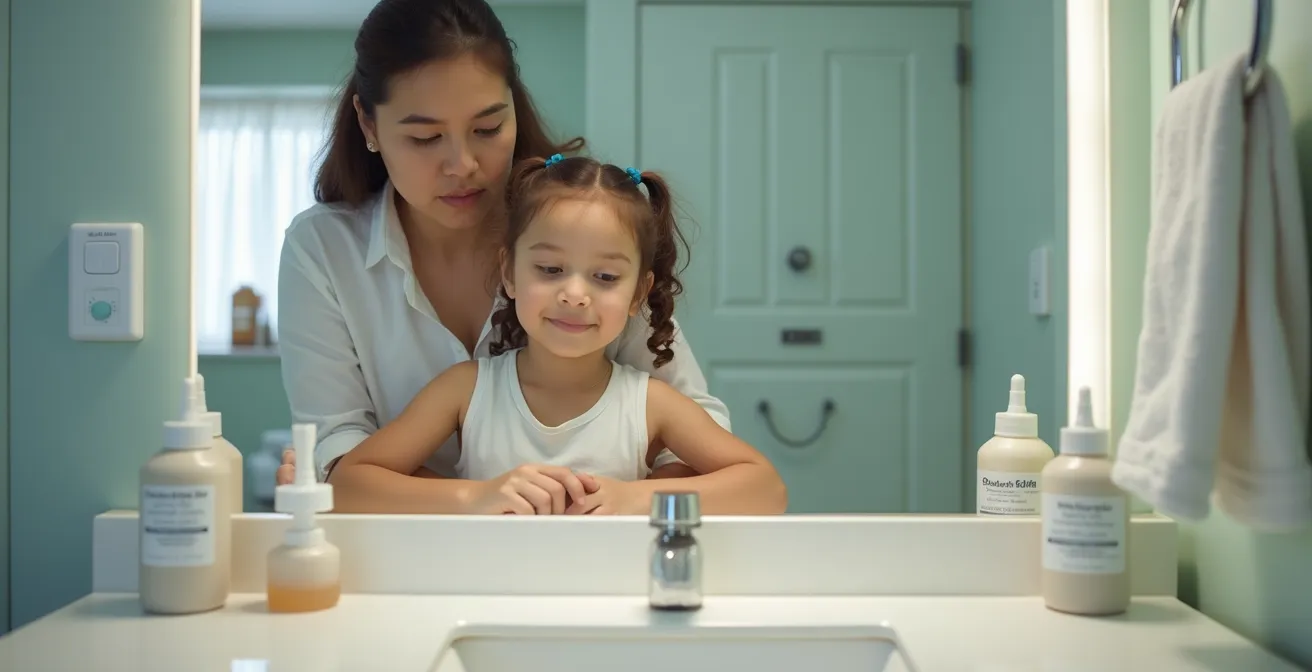
As the image above illustrates, a calm and supportive posture is key. Standing behind the child while they are seated provides stability and a sense of security. The focus should be on creating a positive, reassuring ritual. This can include:
- Using advanced tools like DMV Ultra or See-Green inserters for better control and hygiene.
- Setting up a dedicated “lens station” with a bright, LED magnifying mirror positioned at the child’s eye level.
- Playing calming audiobooks or meditation apps during insertion to create a relaxing atmosphere (avoid stimulating screens).
- Creating a consistent ritual: same time, same chair, same sequence every single night to build predictability.
- Using room-temperature saline solution to fill the lens bowl, reducing the “shock” of cold liquid.
- Using a rolled-up towel under the child’s chin to help stabilize their head position gently.
–
Remember, your own calmness is contagious. If you are anxious, your child will be too. Practice the movements with the inserter tool without the lens first. Celebrate small successes and never turn it into a battle. With patience and the right system, lens insertion becomes a quick, two-minute part of the bedtime routine.
Ortho-K or LASIK: Which Is Better for Someone Who Fears Surgery?
For parents and children with a fear of surgery, the distinction between Ortho-K and LASIK is monumental. Ortho-K is fundamentally a non-surgical, reversible therapy. LASIK is a permanent surgical procedure that alters the eye’s structure. For a child, LASIK is not even an option, as their eyes are still growing and their prescription is unstable. The comparison, therefore, isn’t about which is better *now*, but how Ortho-K can serve as a beneficial bridge to adulthood.
Ortho-K’s primary role in childhood is not just vision correction, but myopia control. By slowing the elongation of the eyeball, it helps prevent a child’s prescription from reaching high levels. This has profound long-term health benefits, as high myopia is linked to a greater risk of serious conditions like retinal detachment and glaucoma later in life. By the time a child who has used Ortho-K reaches their early twenties, they are often a much better candidate for LASIK if they still desire it.
Case Study: The ROMIO Study as a Bridge to Adult Vision Correction
The landmark ROMIO study provided crucial evidence on this topic. It followed children using Ortho-K from ages 6 to 12 and demonstrated a 46% reduction in axial elongation compared to those wearing standard glasses. Follow-up data revealed that these children had final prescriptions 2-3 diopters lower than projected. This not only improved their quality of life during their formative years but also made them better and safer LASIK candidates in adulthood due to a lower level of correction needed and reduced risks associated with high myopia.
The journey from childhood myopia to adult vision correction can be viewed as a long-term pathway. Ortho-K plays a critical role during the growth years when surgery is not an option. The following table illustrates this multi-stage approach:
| Age Range | Ortho-K Status | LASIK Readiness | Myopia Stability |
|---|---|---|---|
| 6-14 years | Active treatment period | Not eligible (eye still growing) | Progression slowed by 50% |
| 14-18 years | Continue or gradual transition | Waiting for prescription stability | Natural slowing begins |
| 18-21 years | Optional continuation | Eligible if stable 1-2 years | Usually stabilized |
| 21+ years | Personal preference | Ideal candidate if desired | Fully stable |
For someone who fears surgery, Ortho-K offers the best of both worlds: freedom from daytime glasses and contacts during childhood and adolescence, all while actively protecting their long-term eye health and keeping future options, including surgery, open and safer.
The Hygiene Strictness Required to Prevent Keratitis With Overnight Lenses
This is the most critical aspect of Ortho-K safety. While the risk of microbial keratitis (a serious corneal infection) is low, it is not zero. However, the power to reduce this risk to a negligible level lies almost entirely in your hands. This requires adopting a “Sterile Cockpit” approach—a rigorous, checklist-driven hygiene protocol that leaves no room for error. It’s not about being “mostly clean”; it’s about absolute, unwavering adherence to the rules every single day.
The single most important rule is to never let tap water touch the lenses or the case. Tap water contains microorganisms, like Acanthamoeba, that can cause severe, vision-threatening infections. All rinsing must be done with sterile saline or multipurpose solution. This rule is non-negotiable. Research confirms that Ortho-K safety is dramatically improved simply by preventing all tap water contact. This commitment to strict hygiene is the foundation of a safe Ortho-K experience.
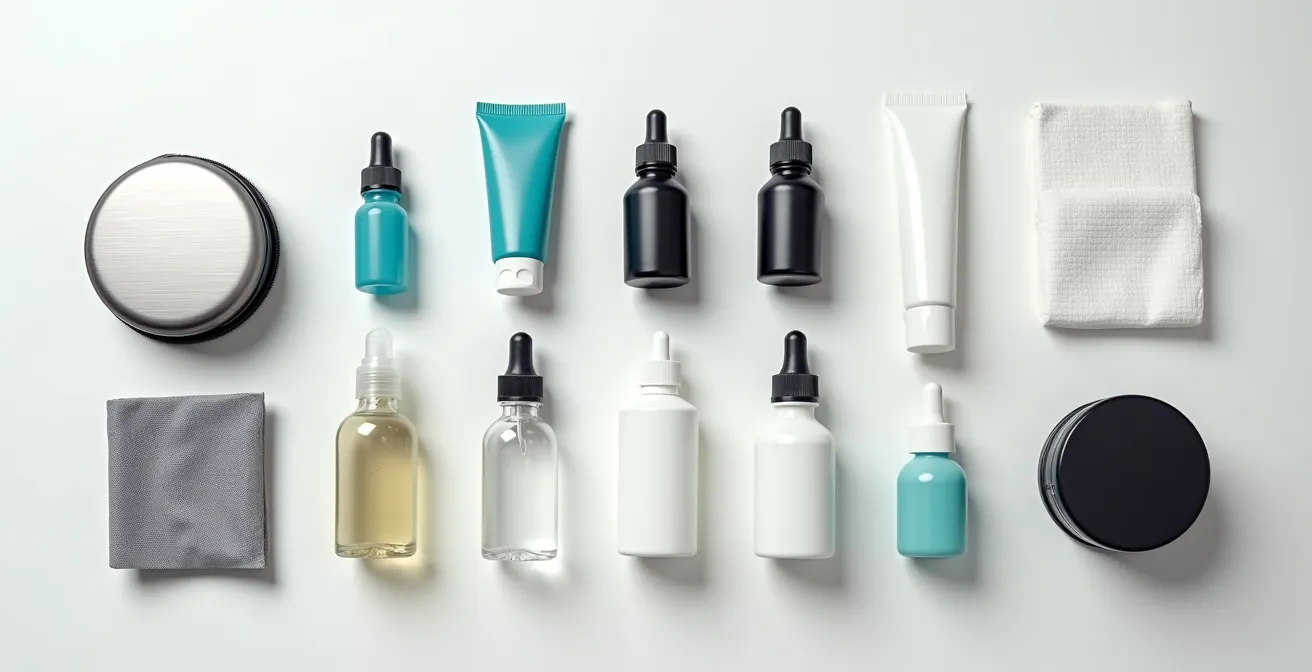
An organized system, as shown in the hygiene kit above, helps maintain this discipline, especially when traveling. Every item has its place, and the process is standardized. Your optometrist will provide specific instructions, but they will all be built around the core principles of cleaning, disinfecting, and safe handling.
Your Checklist: The Sterile Cockpit Protocol for Ortho-K Hygiene
- Pre-Flight Check: Before touching the lenses, wash hands for at least 20 seconds with antibacterial soap and dry them completely with a fresh, disposable paper towel (not a cloth towel).
- Equipment Inspection: Check the expiration dates on all solutions monthly and discard any that are expired. Never decant solutions into smaller travel bottles.
- Daily Cleaning Sequence: Every morning after removal, place the lens in your palm, apply cleaning solution, and rub it for 20 seconds. Then, rinse thoroughly with fresh sterile solution.
- Storage Protocol: Replace the lens case every 3 months, without exception. After inserting lenses at night, empty the old solution, rinse the case with fresh solution, and leave it to air-dry upside down on a clean tissue.
- Red Flag Response: At the first sign of a problem—eye pain, unusual redness, light sensitivity, or discharge—remove the lenses immediately and contact your eye doctor. Do not try to “push through” the discomfort.
By treating this routine with the seriousness it deserves, you are not just cleaning lenses; you are actively implementing a safety system that protects your child’s vision. This discipline is the ultimate reassurance.
Problem & Solution: Getting 20/20 Vision With Only 6 Hours of Sleep
In a world of busy schedules and variable bedtimes, it’s a common question from parents: “Does my child absolutely need a full eight hours of sleep for Ortho-K to work?” The ideal answer is yes, but the practical reality is more nuanced. Consistent wear time is crucial for stable, all-day vision. The gentle molding process takes time, and the full corrective effect is best achieved with 7-8 hours of uninterrupted wear.
What happens on nights with less sleep? The lenses will still provide a significant corrective effect. After just six hours, your child will likely wake up with clear vision. However, this correction may not be as robust or long-lasting. The cornea has a “memory” and will begin to revert to its natural shape sooner than it would after a full night’s wear. This often results in afternoon blurriness or a slight decrease in sharpness, especially on days following shorter wear time.
Case Study: Sleep Duration’s Impact on Ortho-K Effectiveness
This phenomenon is well-documented. For instance, clinical observations from Korean studies on Ortho-K wearers show a clear link between wear time and vision quality. While some corneal flattening occurs after just 6 hours, optimal and stable 20/20 vision throughout the entire day requires a consistent 7-8 hours. The studies noted that children with irregular sleep patterns (alternating between 6-hour and 8-hour nights) experienced more significant vision fluctuation, with afternoon blur being a common complaint.
The solution is not to panic on nights when a full eight hours isn’t possible, but to prioritize consistency. Aim for a regular bedtime that allows for at least seven hours of lens wear. If you know it was a short night, be prepared. Have rewetting drops on hand for your child to use in the afternoon, as this can sometimes improve comfort and clarity. Acknowledge that their vision might not be perfect by the end of the day and ensure they have their backup glasses available if needed, particularly for evening activities like homework or sports.
Ultimately, the goal is to establish a routine that makes 7-8 hours of wear the norm, not the exception. This consistency is what delivers the best possible vision correction and, most importantly, the most effective long-term myopia control for your child.
Standard Lenses or Myopia Control: Which Is Worth the Investment for a 10-Year-Old?
When comparing the cost of Ortho-K to standard glasses, it’s easy to get “sticker shock.” The initial investment for Ortho-K is significantly higher. However, framing this as a simple cost comparison is misleading. The true evaluation should be based on a “Long-term Investment Axis,” which considers not just the 10-year financial outlay but also the investment in your child’s future health, lifestyle freedom, and quality of life.
Standard glasses correct blurry vision, but they do nothing to stop the underlying problem: the eyeball continuing to grow longer. Ortho-K is a medical treatment designed to slow this progression. The return on this investment is measured in diopters. A lower final prescription is not just a matter of thinner lenses; it’s a direct reduction in the lifetime risk of serious, sight-threatening diseases. For example, powerful evidence shows that for every diopter of myopia reduction, the risk of developing myopic maculopathy, a leading cause of irreversible vision loss, is lowered by 40%.
The following table provides a more holistic comparison for a typical 10-year-old starting their journey:
| Investment Axis | Standard Glasses | Ortho-K Myopia Control |
|---|---|---|
| Initial Cost (Year 1) | $200-400 | $1,500-2,500 |
| 10-Year Total Cost | $2,000-4,000 | $8,000-12,000 |
| Expected Final Prescription | -5.00 to -6.00D | -2.50 to -3.50D |
| High Myopia Risk | 35-45% | 10-15% |
| Daily Time Investment | 5 seconds | 10 minutes |
| Lifestyle Freedom | Glasses all day | No daytime correction needed |
Case Study: 11-Year Follow-up on Ortho-K Investment Outcomes
Long-term data confirms this value. Menicon’s 11-year orthokeratology study, presented at IMC 2024, tracked children from age 7 to 18. Those who began Ortho-K around age 10 showed final prescriptions that were, on average, 2.5 diopters lower than their peers in standard glasses. This translated to a 60% reduced risk of associated retinal complications and projected lifetime savings of thousands in future high-prescription vision care costs.
The investment in Ortho-K is an investment in a healthier future for your child’s eyes. It provides them with the freedom to play sports, swim, and live without the encumbrance of glasses during the day, all while actively working to protect their vision for a lifetime.
Why RGP Lenses Are Healthier for the Cornea Than Soft Lenses?
A key element of Ortho-K’s safety profile lies in the material the lenses are made from: Rigid Gas Permeable (RGP) plastic. While the word “rigid” might sound intimidating compared to “soft,” these materials are significantly healthier for the cornea, especially for overnight wear. The primary reason is oxygen permeability. Your cornea has no blood vessels; it gets the oxygen it needs to stay healthy directly from the air. When you close your eyes to sleep, the oxygen supply is already reduced. Placing a lens on the eye reduces it further.
RGP materials are engineered to allow a very high amount of oxygen to pass through them. This is measured by a “Dk/t value.” Ortho-K lenses have Dk/t values far superior to almost all soft lenses, ensuring the cornea receives adequate oxygen even during sleep. This dramatically reduces the risk of hypoxia-related complications like swelling (edema) or the growth of new blood vessels into the cornea.
Case Study: Oxygen Permeability in Overnight Wear
Studies directly comparing lens materials are clear on this point. RGP materials used in modern Ortho-K maintain Dk/t values of 75-100. This is three to four times higher than most soft lenses that are approved for overnight wear. This superior oxygen transmission is a primary reason for the lower incidence of oxygen-related complications in RGP lens wearers compared to those using extended-wear soft lenses.
Beyond oxygen, RGP lenses offer several other distinct health advantages over soft lenses:
- Less Deposit Buildup: The non-porous surface of RGP lenses resists protein and lipid deposits from tears, accumulating 90% fewer deposits than soft lenses. This keeps the lens cleaner and reduces the risk of irritation and infection.
- Better Tear Exchange: RGP lenses are smaller than the cornea and move slightly with each blink. This creates a “tear pump” mechanism that flushes fresh, oxygen-rich tears under the lens, washing away debris.
- No Dehydration: Soft lenses contain water and can dry out, tightening on the eye and causing discomfort. RGP lenses have no water content and maintain their shape and fit throughout the night.
These material properties are a cornerstone of Ortho-K’s design. They ensure that while the lens is reshaping the cornea, it is doing so in the healthiest possible environment, prioritizing the long-term integrity of your child’s eye.
Key Takeaways
- Safety is a System: True Ortho-K safety comes from a “sterile cockpit” protocol at home, not just the lenses themselves. Strict, consistent hygiene is paramount.
- It’s a Health Investment: Ortho-K is more than vision correction; it’s a medical treatment that actively reduces the risk of future eye diseases by controlling myopia progression.
- Reversibility is a Feature: The temporary nature of the corneal reshaping is a core safety feature. Missed nights are manageable with a backup plan and do not cause permanent harm.
Is Your Child’s Nearsightedness Progressing Too Fast for Standard Glasses?
One of the first triggers for exploring myopia control is the alarming feeling that your child’s vision is worsening at a rapid pace. But what does “too fast” actually mean in a clinical sense? While any increase in prescription can be concerning, optometrists have specific benchmarks to identify when intervention is most critical. It’s not just about the current prescription, but the rate of change over time.
Generally, progression is considered rapid and warrants a discussion about myopia control when a child’s prescription changes by more than -0.50 diopters in a single year. In some cases, particularly for younger children, a change of -0.75 diopters or more per year is a significant red flag. This indicates that the eyeball is elongating at an accelerated rate, increasing the risk of high myopia and its associated pathologies in the future. Standard glasses and contacts correct the blurry vision caused by this elongation, but they do nothing to slow the process itself. This is like constantly mopping a wet floor without fixing the leaky pipe.
The age of the child is a critical factor. The most rapid myopia progression typically occurs between the ages of 8 and 15. This period represents the most important “window of opportunity” to intervene.
Case Study: The Window of Opportunity for Intervention (Ages 8-15)
An extensive analysis of progression patterns in over 5,000 children highlighted the importance of this age window. The study found that the median progression was -0.67D per year at age 7, which gradually slowed to -0.18D per year by age 17. The key finding was that children who started a myopia control treatment like Ortho-K during this 8-15 age window achieved a 40-60% reduction in their final prescription compared to those who only wore standard glasses. The benefits were greatest for those who started before the age of 10, underscoring the urgency of early detection and action.
If you notice your child needing a stronger prescription every year, or if their rate of change meets or exceeds that -0.50D threshold, it is a clear signal that standard glasses are no longer a sufficient strategy. It’s time to have a proactive conversation with your eye care professional about effective myopia control options like Ortho-K to protect your child’s long-term vision and health.