
The chronic redness and fatigue you feel from your contact lenses are not just discomfort; they are symptoms of an accumulating “physiological debt” in your cornea caused by oxygen starvation.
- Low oxygen permeability (low Dk/t) forces your cornea into an anaerobic state, leading to swelling, waste buildup, and long-term damage.
- Modern materials like Silicone Hydrogel and specific lens types like RGPs are designed to maximize corneal respiration and prevent this debt from accruing.
Recommendation: Prioritize lenses with a high Dk/t value and adopt a wear schedule that includes an “oxygen recharge” period before sleep to ensure the long-term health of your eyes.
That persistent redness and tired feeling in your eyes at the end of a long day of contact lens wear is more than just a minor annoyance. For many wearers, it’s a daily reality accepted as a “cost” of ditching glasses. The common advice is often a simple directive: switch to lenses with higher oxygen permeability, or a higher “Dk/t” value. While this is correct, it barely scratches the surface of the complex physiological drama unfolding on your eye’s surface.
This isn’t merely about comfort. It’s about corneal health. The constant struggle for oxygen puts your cornea under significant stress, creating a “physiological debt” that accumulates over time. This debt manifests first as redness and fatigue, but can progress to more serious conditions like corneal swelling (edema) and the growth of new, unwanted blood vessels (neovascularization). Understanding the *why* behind this process is the first step toward true, lasting relief and proactive eye care.
The solution isn’t just a higher Dk/t number on a box; it’s a fundamental shift in understanding how your cornea breathes. This article moves beyond the simplistic “good vs. bad” debate. We will dissect the cellular mechanisms of oxygen deprivation, explain what happens during even a short nap, and provide a clear, science-backed framework for choosing lenses and habits that respect your cornea’s biological needs. It’s time to stop managing symptoms and start promoting genuine corneal health.
This guide will walk you through the critical aspects of corneal health related to contact lens wear. By exploring the science of oxygen permeability, you’ll gain the knowledge to make informed decisions for clearer, more comfortable vision and healthier eyes in the long run.
Contents: Understanding Corneal Oxygenation and Contact Lenses
- Why Your Cornea Swells When Deprived of Oxygen for 10 Hours?
- How to Check Your Eyes for Neovascularization in the Mirror?
- Hydrogel or Silicone Hydrogel: Which Is Essential for 12-Hour Wear?
- The Hypoxia Spike: What Happens to Your Eyes During a 20-Minute Nap
- When to Remove Lenses: The “2-Hour Before Sleep” Rule Explained
- Why Silicone Hydrogel Allow for Longer Wear Times Than Older Materials?
- Why RGP Lenses Are Healthier for the Cornea Than Soft Lenses?
- Safe Continuous Wear: Is Sleeping in Contacts Worth the Infection Risk?
Why Your Cornea Swells When Deprived of Oxygen for 10 Hours?
The cornea is a unique, avascular tissue; it has no blood vessels and gets most of its oxygen directly from the atmosphere. When you place a contact lens on it, you’re essentially placing a barrier over its primary source of “air.” If that barrier is not sufficiently permeable (i.e., has a low Dk/t value), the cornea begins to suffocate. This state is known as hypoxia. After several hours, the physiological consequences become measurable and visible.
Deprived of oxygen, the corneal cells can no longer perform efficient aerobic respiration. They switch to a far less efficient backup plan: anaerobic metabolism. A primary byproduct of this process is lactic acid. As lactic acid accumulates within the corneal tissue, it disrupts the natural osmotic balance. This buildup effectively draws water into the cornea from the surrounding tear film and aqueous humor, causing it to swell. This swelling is called corneal edema.
This isn’t a minor effect. Even during normal sleep with closed eyelids, research shows the normal cornea swells approximately 4% due to reduced oxygen. Wearing a low-Dk/t lens for a prolonged period, like 10 hours, exacerbates this significantly. This edema is what causes the hazy vision and discomfort you may experience after removing your lenses. It’s the first clear sign that your cornea has accrued a significant physiological debt from a day of oxygen deprivation.
How to Check Your Eyes for Neovascularization in the Mirror?
While daily corneal swelling is a reversible sign of acute hypoxia, chronic oxygen deprivation can lead to a more permanent and concerning change: corneal neovascularization. This is a defense mechanism where the body, sensing the cornea is starved for oxygen, begins to grow new blood vessels from the white part of the eye (the sclera) into the normally clear cornea. While the body’s intention is to supply oxygen via blood, these vessels are fragile, can leak, and ultimately compromise the cornea’s transparency and health.
The insidious nature of neovascularization is that it’s often painless and progresses slowly, making it easy to miss in its early stages. However, you can perform a basic self-check to monitor for warning signs. These tiny, thread-like red vessels will appear to “invade” the clear edge of your cornea. The key is to look for vessels that cross the limbus—the border between the colored iris/clear cornea and the white sclera.

Performing this check requires good lighting and a methodical approach. The goal is to clearly see the boundary where the white of your eye meets the clear cornea and identify any vessels that appear to be crossing over. Below is a simple protocol you can follow.
Action Plan: 3-Point Self-Check for Neovascularization
- Use bright, side lighting in front of a mirror to illuminate the eye surface without causing glare. A small penlight held at an angle can be very effective.
- Look straight ahead, then gently pull down your lower eyelid and look up, and then pull up your upper eyelid and look down to expose more of the eyeball’s surface area.
- Specifically observe the transition zone (limbus) for any fine, red blood vessels that seem to be growing from the white part of the eye across the border and into the clear cornea.
Hydrogel or Silicone Hydrogel: Which Is Essential for 12-Hour Wear?
The material of your contact lens is the single most important factor determining its oxygen permeability. For decades, the standard soft lens material was traditional hydrogel. These materials hold a large amount of water, and oxygen reaches the cornea by dissolving in and passing through this water. However, there is a physical limit to how much oxygen can pass through water, which caps the Dk/t of even the best hydrogel lenses at a relatively low level.
This limitation led to the development of silicone hydrogel (SiHy). This revolutionary material incorporates silicone, which is intrinsically far more permeable to oxygen than water. SiHy lenses create microscopic channels of silicone that allow oxygen to stream directly through the lens to the cornea, bypassing the water-based pathway. This allows for significantly higher Dk/t values, making them the clear choice for anyone wearing lenses for extended periods, such as a full 12-hour day.
The difference in performance is stark. A wearer with traditional hydrogel lenses may begin to experience the effects of hypoxia—redness, dryness, and fatigue—well before their day is over. In contrast, a SiHy lens can provide sufficient oxygen to keep the cornea healthy and comfortable for 12 hours or more. The following table breaks down the key differences.
| Property | Traditional Hydrogel | Silicone Hydrogel |
|---|---|---|
| Oxygen Permeability (Dk/t) | 20-40 | 100-150+ |
| Water Content | 38-75% | 24-74% |
| 12-Hour Wear Suitability | Limited | Excellent |
| Deposit Resistance | Lower | Higher |
The Hypoxia Spike: What Happens to Your Eyes During a 20-Minute Nap
Even a short nap while wearing contact lenses can subject your corneas to a significant physiological shock. This is due to the “Hypoxia Spike”—a rapid and dramatic drop in the oxygen available to your cornea. When your eyes are open, the cornea receives oxygen from the air, at a concentration of about 21%. When you close your eyes for sleep, that supply is immediately cut off. The only oxygen available comes from the dense network of capillaries on the back of your eyelids.
This environment is already oxygen-poor. Research has established that with the eye closed the oxygen level drops to about 7-8%. Now, add a contact lens into the equation—even a high-Dk/t one. That lens acts as a second barrier, further reducing the already limited oxygen supply. This double-barrier effect plunges the cornea into a state of acute hypoxia far more severe than during normal wear with open eyes.
During this 20-minute nap, the cornea rapidly switches to anaerobic metabolism, producing lactic acid and triggering the onset of edema. While the effects of a single short nap may be transient, repeated napping in contact lenses contributes significantly to your cornea’s overall physiological debt. It’s a concentrated dose of the very stress you’re trying to avoid with high-Dk/t lenses.
A contact lens reduces the oxygen supply to the cornea, making the cornea swell. Wearing contacts overnight further decreases the amount of oxygen that gets to the cornea.
– Ignite Healthwise, LLC, Contact Lens Problems: Hypoxia
When to Remove Lenses: The “2-Hour Before Sleep” Rule Explained
For contact lens wearers, the end of the day isn’t just about removing the lenses; it’s about giving your corneas a crucial period of recovery. This is the principle behind the “2-Hour Before Sleep” rule. This guideline recommends removing your contact lenses at least two hours before you go to bed. The purpose is to allow your cornea a dedicated “oxygen recharge” period.
After a full day of wear, even with high-Dk/t lenses, your cornea has been under some level of stress and has accumulated metabolic waste products like lactic acid. Removing your lenses allows for maximum exposure to atmospheric oxygen (21%). This “recharge” period enables the cornea to accomplish two critical tasks before you enter the low-oxygen environment of sleep (7-8% oxygen with closed lids):
- Flush out metabolic waste: Unobstructed, the cornea can more efficiently clear the lactic acid and other byproducts that have built up, reducing edema and restoring its natural metabolic balance.
- Replenish oxygen reserves: This time allows the corneal tissue to become fully saturated with oxygen, creating a buffer that helps it better withstand the natural hypoxia of sleep.
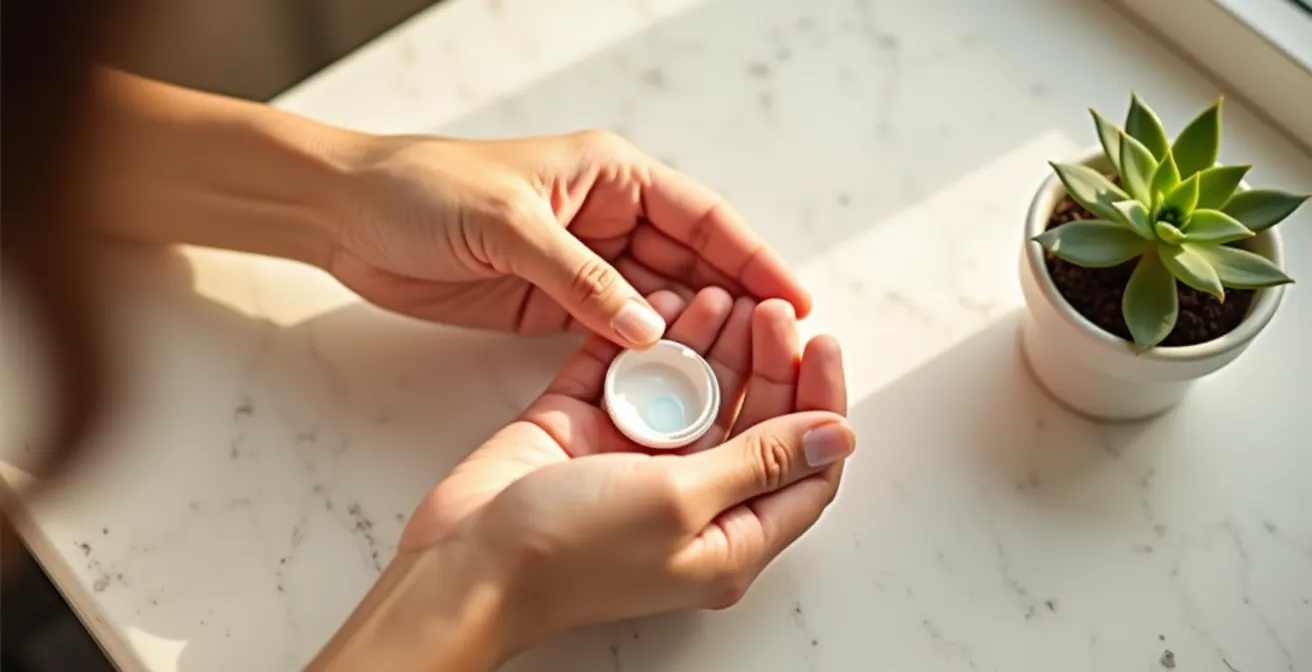
Think of it like letting a muscle recover after a workout. By giving your corneas this break, you reduce the cumulative physiological debt, leading to healthier eyes, less morning redness, and greater comfort over the long term. It transforms lens removal from a simple task into a proactive health ritual.
Why Silicone Hydrogel Allow for Longer Wear Times Than Older Materials?
The superior performance of silicone hydrogel (SiHy) for extended wear isn’t just about a higher starting Dk/t value; it’s about the stability of its oxygen transmission throughout the day. This reliability stems from its unique molecular structure. As previously mentioned, traditional hydrogel lenses rely on water to transport oxygen. The problem is that these lenses can dehydrate over a long day of wear, especially in dry or air-conditioned environments. As the water content decreases, so does the oxygen permeability, leading to late-day discomfort and hypoxia.
Silicone hydrogel materials solve this problem ingeniously. They create a “two-channel” system for transport. While water is still present, the material is interwoven with a network of silicone pathways. Oxygen is highly soluble in silicone and travels preferentially through these channels. This means that even if the lens begins to dehydrate and lose some water, the primary oxygen pathways through the silicone remain open and efficient. This allows silicone hydrogel contact lenses to transmit roughly 5 times more oxygen than their traditional hydrogel counterparts.
This structural difference is the key to their success for long wear times. A SiHy lens provides a more consistent and reliable supply of oxygen from morning until night, preventing the gradual onset of hypoxia that plagues many traditional hydrogel wearers. This stability is what makes them feel more comfortable at the end of the day and what makes them fundamentally healthier for your corneas over the long term.
Why RGP Lenses Are Healthier for the Cornea Than Soft Lenses?
While soft lenses, particularly silicone hydrogels, have made great strides, many corneal physiologists still consider Rigid Gas Permeable (RGP) lenses to be a physiologically superior option for many wearers. Their health benefits are rooted in their design, size, and interaction with the tear film. Unlike soft lenses that drape over the entire cornea, RGP lenses are smaller in diameter and rest on the central part of the cornea, leaving a significant portion of the peripheral cornea completely uncovered and exposed to oxygen.
More importantly, RGP lenses move slightly on the eye with every blink. This movement creates a powerful “tear pump” mechanism. As the lens moves, it pulls fresh, oxygen-rich tears underneath it and simultaneously flushes out old tears and metabolic waste products from behind the lens. This constant refreshment creates a much healthier environment for the cornea than the relatively static environment under a soft contact lens. It’s an active system of oxygenation and cleansing.
Furthermore, RGP materials themselves are extremely high in oxygen permeability. When you combine this high intrinsic Dk with the active tear pump, the result is a level of corneal oxygenation that is often superior to even the best soft lenses. They also do not contain water, so they do not dehydrate, and their smooth, non-porous surface is more resistant to deposit buildup. For patients with conditions like astigmatism or keratoconus, they also provide much sharper optics.
Key Takeaways
- Corneal swelling (edema) is a direct result of oxygen deprivation forcing your eye into anaerobic respiration, a clear sign of physiological debt.
- Silicone hydrogel’s molecular structure provides stable, high oxygen flow that doesn’t depend solely on water content, making it essential for long wear.
- The “2-Hour Before Sleep” rule is a critical health practice that allows your cornea to “recharge” on oxygen and clear metabolic waste before bed.
Safe Continuous Wear: Is Sleeping in Contacts Worth the Infection Risk?
The allure of continuous wear lenses—waking up with clear vision without reaching for glasses—is undeniable. Modern silicone hydrogel lenses approved for overnight wear offer incredibly high Dk/t values to minimize hypoxia during sleep. However, even with the oxygen problem largely mitigated, a far more serious risk remains: microbial keratitis, a severe infection of the cornea. This risk is the single most important factor to consider when contemplating sleeping in your contacts.
When you sleep, your eye’s natural defenses are down. Blinking ceases, tear flow is reduced, and the warm, moist environment under a contact lens becomes an ideal incubator for bacteria and other pathogens. The lens acts as a surface (a biofilm) to which these microorganisms can adhere, dramatically increasing their contact time with the corneal surface. Even a microscopic scratch on the cornea, which might be harmless otherwise, can become an entry point for a devastating infection when a contaminated lens is present.
The statistics are sobering. While the overall incidence of microbial keratitis is low, the risk is not evenly distributed. A comprehensive analysis shows that for daily disposable lens wearers, the yearly incidence is about 0.52 per 10,000. However, for those using extended-wear lenses overnight, that risk skyrockets. Studies consistently show the yearly risk is up to 5 times higher for overnight wear. This infection can lead to corneal scarring, vision loss, and in rare cases, the need for a corneal transplant. While the technology for oxygen has improved, the biological risk of infection remains a profound concern that outweighs the convenience for most individuals.
Ultimately, the decision to wear contact lenses, and which type to choose, is a health decision, not just a cosmetic one. Prioritizing corneal respiration by selecting high-Dk/t materials and adopting healthy habits like the “2-hour rule” is the most effective strategy for ensuring your eyes remain clear, comfortable, and healthy for years to come. For personalized advice based on your specific corneal health and lifestyle, a comprehensive examination with your eye care professional is the essential next step.