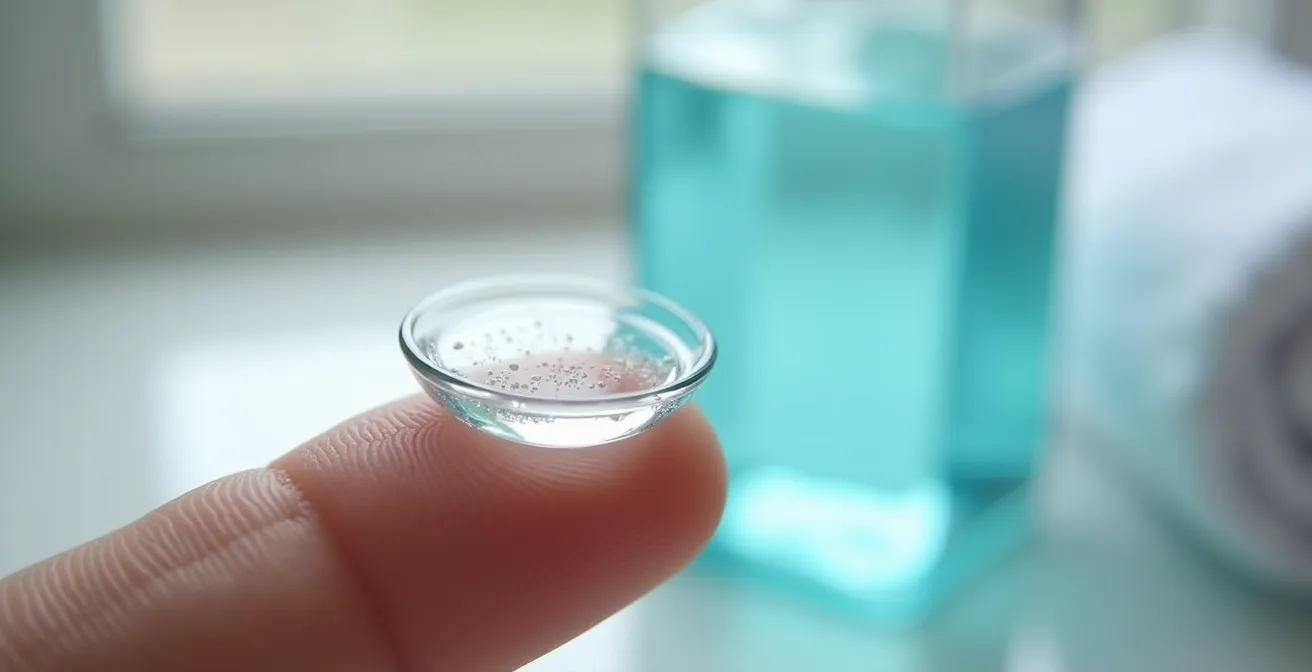
The frustrating, oily film on your contacts isn’t just dirt; it’s a diagnostic sign that your tear film’s lipid layer is out of balance and binding directly to your lenses.
- Modern silicone hydrogel lenses are ‘lipophilic’ (oil-attracting), making them more susceptible to this cloudy buildup from your own tears.
- The root cause is often Meibomian Gland Dysfunction (MGD), where the glands in your eyelids produce poor-quality, unstable oil.
Recommendation: The solution lies in a holistic approach: improving meibomian gland function through diet and hygiene, and adopting a cleaning method that specifically targets and removes stubborn lipid deposits.
There’s a unique frustration that only contact lens wearers know: the stubborn, smeary film that makes your vision cloudy, even moments after cleaning. You rub, you rinse, you soak, yet the fog returns. While many assume this is simple protein buildup or external debris, the reality is often more complex and rooted in your own ocular biology. The persistent, oily haze that refuses to wipe away is a classic symptom of lipid deposits—fats from your own tear film—chemically bonding with your lenses.
As a tear film specialist, my approach is not just to treat the lens, but to diagnose the environment it sits in. This problem is rarely about a faulty lens or a poor cleaning solution alone. It’s about the intricate interaction between your tear film’s quality, your personal habits, and the specific material of your contact lenses. Understanding this interplay is the first step toward achieving consistently clear and comfortable vision.
This guide will move beyond the generic advice. We will explore the science of your tear film, identify the true sources of lipid contamination—from cosmetics to diet—and outline targeted strategies to manage them. By understanding the ‘why’ behind the cloudiness, you can finally implement the ‘how’ to prevent it.
To navigate this complex issue, we will deconstruct the problem piece by piece. The following sections provide a complete diagnostic overview, from external factors to the internal biology of your eyes, giving you the knowledge to finally solve your cloudy lens problem.
Summary: Why Your Contact Lenses Are Still Foggy
- Why Eyeliner on the Waterline Destroys Contact Lenses Faster?
- How to Adjust Your Diet to Reduce Excess Oil in Your Tear Film?
- Weekly Enzyme Tablets or Daily Rubbing: Which Removes Lipids Best?
- The Permanent Fog: When Lipid Deposits Penetrate the Lens Matrix
- When to Apply Face Cream: Before or After Inserting Lenses?
- Why Silicone Lenses Get Cloudier With Oily Tears Than Older Materials?
- Oil Glands or Tear Ducts: Which Is the Root of Your Dryness?
- Why Meibomian Glands Need High-Quality Fats to Function?
Why Eyeliner on the Waterline Destroys Contact Lenses Faster?
Applying makeup, particularly eyeliner, directly onto the “waterline”—that thin strip of skin inside the lash line—is one of the most direct ways to contaminate your contact lenses. This area is populated with the openings of the Meibomian glands, the very glands responsible for secreting the essential lipid layer of your tear film. When you apply waxy or oily eyeliner here, you are essentially spackling over these delicate openings.
This does two things, both detrimental to your lenses. First, it physically blocks the glands, which can worsen their function over time and lead to a less stable tear film. Second, makeup particles—oils, waxes, and pigments—inevitably migrate from the waterline into the tear film and onto the surface of your contact lens. Since these cosmetic ingredients are lipophilic (oil-based), they readily bind to the lens surface, creating an immediate, greasy film that is incredibly difficult to clean.
This isn’t just a minor issue; it’s a primary source of the stubborn cloudiness many wearers experience. The particles create a smeared, foggy layer that standard multipurpose solutions struggle to break down. Preventing this direct contamination is a crucial first step in maintaining clear lenses throughout the day.
How to Adjust Your Diet to Reduce Excess Oil in Your Tear Film?
The quality of the oil in your tear film is directly influenced by the fats you consume. While it might seem counterintuitive to fight oil with oil, the key is not to eliminate fats, but to consume the right kind of fats. The oils (meibum) produced by your Meibomian glands need to have a very low melting point to flow freely and form a smooth, stable layer over your tears. A diet high in saturated fats and processed foods can lead to the production of thick, granular meibum that clogs the glands and doesn’t spread properly.
To improve the quality of your meibum, focus on incorporating omega-3 fatty acids into your diet. These healthy fats are known to have anti-inflammatory properties and help produce higher-quality, more fluid meibum. This results in a more stable lipid layer, which not only prevents dry eye symptoms but also reduces the amount of unstable, excess oil available to stick to your lenses.

As shown in the image, excellent sources of omega-3s include fatty fish like salmon, mackerel, and sardines, as well as plant-based sources like flaxseed, chia seeds, walnuts, and avocados. Shifting your dietary fat intake towards these sources can, over time, systemically improve your tear film quality from the inside out, leading to cleaner lenses and more comfortable wear.
Weekly Enzyme Tablets or Daily Rubbing: Which Removes Lipids Best?
When it comes to keeping lenses free of deposits, not all cleaning methods are created equal, especially when tackling lipids versus proteins. Historically, enzyme tablets were a popular choice for a weekly deep clean. However, their primary function is to break down protein deposits. While effective for that purpose, they are significantly less effective at removing the stubborn, greasy lipid films that cause smeary vision.
The most effective method for removing fresh lipid deposits is the simple, mechanical action of rubbing. As expert sources confirm, a “rub and rinse” step is non-negotiable for optimal lens hygiene, even when using a “no-rub” solution. Rubbing the lens in your palm with a few drops of solution for 20-30 seconds physically dislodges the oily buildup before the disinfection process begins. For a more intensive clean, hydrogen peroxide systems are highly effective as they often contain surfactants (detergents) specifically designed to dissolve lipids and proteins during the multi-hour neutralization cycle.
This is clearly outlined by a comparative analysis of cleaning methods. As CooperVision’s guidelines state, the evidence is overwhelming:
Studies have shown that ‘rub and rinse’ is the best way of cleaning contact lenses, even with ‘no-rub’ contact lens cleaning solutions
– CooperVision, CooperVision Contact Lens Care Guide
| Cleaning Method | Primary Target | Lipid Removal | Time Required |
|---|---|---|---|
| Daily Rub & Rinse | Fresh deposits | Most effective for fresh lipids | 30-60 seconds |
| Enzyme Tablets | Protein deposits | Less effective on lipids | Weekly treatment |
| Hydrogen Peroxide | All deposits + disinfection | Contains surfactants for lipid removal | 6-8 hours soaking |
Ultimately, for daily management of oily films, nothing beats the manual rub and rinse. For a periodic deep clean that targets all deposits, a hydrogen peroxide system is a superior choice to traditional enzyme tablets.
The Permanent Fog: When Lipid Deposits Penetrate the Lens Matrix
Sometimes, no amount of cleaning can restore a lens to its original clarity. When this happens, it’s likely you’re dealing with permanent fog, a condition where lipid deposits are no longer just on the surface but have been absorbed into the lens material itself. This is particularly common with modern contact lens materials and is a clear sign that the lens has reached the end of its life.
Case Study: Lipid Absorption in Silicone Hydrogel Lenses
NVISION Centers report that protein and lipid buildup on contact lenses creates a cloudy appearance that accumulates over time. In cases of silicone hydrogel lenses, the lipophilic nature of the material allows lipids to be absorbed into the porous polymer matrix. Once embedded, these deposits cannot be cleaned off, requiring lens replacement. The centers note that wearing contacts past their intended lifespan significantly increases this clouding effect.
Once lipids penetrate this porous lens matrix, they become trapped. No surface cleaner can reach them, and the lens becomes irreversibly cloudy, often taking on a hazy or yellowish tint. This is a primary reason why adhering to the manufacturer’s replacement schedule (daily, bi-weekly, or monthly) is a matter of both safety and visual quality. Over-wearing lenses dramatically increases the likelihood of this permanent absorption.
If you find your lenses are cloudy from the moment you put them in, even after an overnight soak, they have likely reached this point of saturation. The only solution is replacement. To avoid this issue altogether, the best option is to use lenses that don’t give deposits a chance to build up. According to the American Academy of Ophthalmology, Daily disposable lenses are the safest type of soft contact lens because they eliminate the risk of deposit accumulation and matrix penetration entirely.
When to Apply Face Cream: Before or After Inserting Lenses?
The order of your morning routine can have a significant impact on the clarity of your contact lenses for the rest of the day. Lotions, moisturizers, and face creams are emulsions of oil and water, and transferring even a microscopic amount to your lenses can cause immediate, stubborn cloudiness. Your hands are the primary vehicle for this transfer.
The cardinal rule is: lenses first, lotions last. Always wash your hands thoroughly, dry them with a lint-free towel, and insert your contact lenses before you touch any creams or makeup. After applying your skincare products, it’s wise to wash your hands again to remove any residue before you go about your day. This prevents accidental transfer if you need to touch your eyes or face later.
The type of soap you use is also critical. As the Warby Parker Eye Care Team notes, you should avoid moisturizing soaps for handwashing before handling lenses:
Antibacterial soap is best—moisturizing soaps can actually make your contacts cloudy
– Warby Parker Eye Care Team, How to Clean Contact Lenses Guide
Moisturizing soaps often contain lotions or oils (like lanolin) that can leave a film on your fingers, which is then transferred directly onto your lenses, creating the very problem you’re trying to avoid. Following a strict sequence is a simple but highly effective strategy for preventing lipid contamination from skincare products.
Your Action Plan: The Optimal Morning Routine
- Wash hands thoroughly with antibacterial soap and dry with a lint-free towel.
- Insert contact lenses with clean, dry hands.
- Apply face creams and lotions, carefully avoiding the immediate eye (orbital) area.
- Wash hands again after applying creams to remove any oily residue.
- Apply makeup last, ensuring you avoid applying any products to the eyelid waterline.
Why Silicone Lenses Get Cloudier With Oily Tears Than Older Materials?
If you’ve noticed that your cloudiness problem seemed to start or worsen after switching to a newer type of contact lens, you’re not imagining it. Modern silicone hydrogel lenses, while a major advancement in breathability and all-day comfort, have an inherent chemical property that makes them more susceptible to lipid deposits than older hydrogel materials.
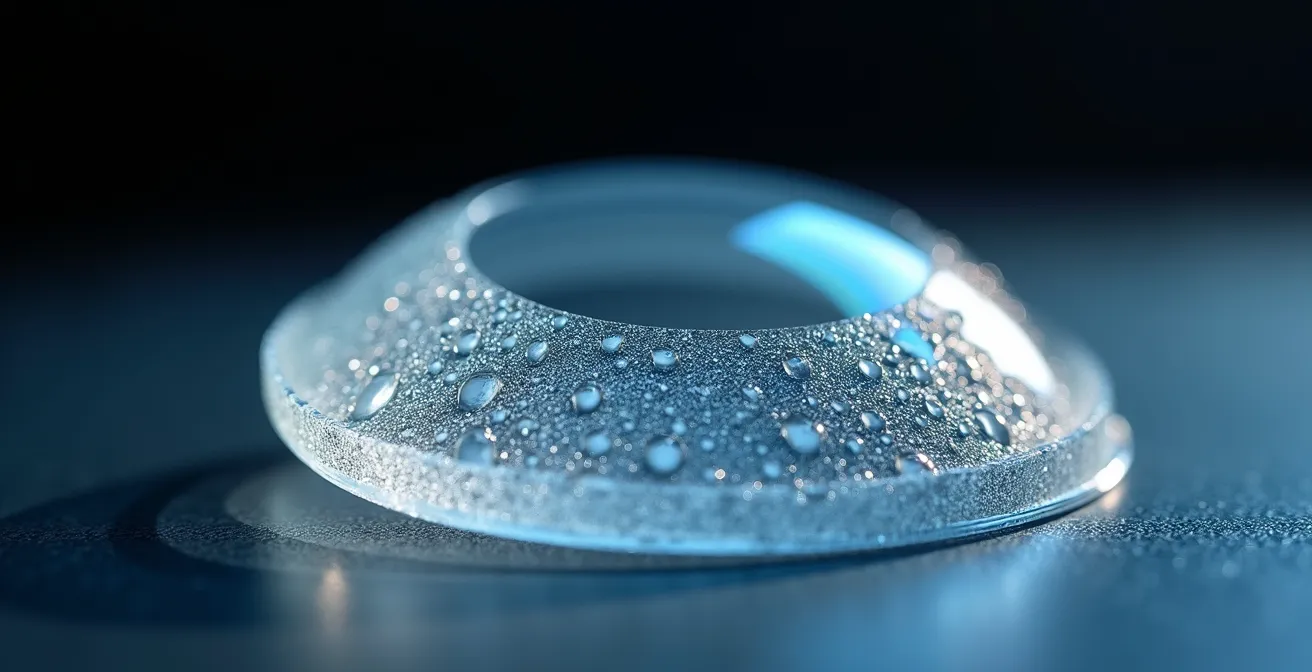
The silicone component, which allows for superior oxygen permeability, is naturally lipophilic, meaning “oil-attracting.” It acts like a magnet for the lipid molecules in your tear film. To counteract this, manufacturers apply sophisticated, ultra-thin surface treatments and plasma coatings that create a hydrophilic (“water-attracting”) barrier between the lens and your tears. These treatments work well, but they are not infallible.
The Double-Edged Sword of Silicone Hydrogel
As NVISION Centers explain, these protective surface coatings can wear down over a monthly or bi-weekly wearing cycle due to daily handling, rubbing, and cleaning. As the coating degrades, it exposes the underlying lipid-attracting silicone. For wearers with an already oily tear film or Meibomian Gland Dysfunction, this exposure accelerates the rate of cloudy buildup, making the lenses feel dirtier faster compared to older, purely hydrophilic hydrogel materials which, while less breathable, did not attract lipids as aggressively.
This is why a person with oily tears might find their month-long silicone hydrogel lenses become unbearably cloudy by week three. It’s not necessarily a failure of the lens, but a predictable chemical interaction between a lipophilic material and an lipid-rich ocular environment.
Oil Glands or Tear Ducts: Which Is the Root of Your Dryness?
Many people who experience cloudy lenses also report symptoms of dry eye, which can seem confusing. To pinpoint the source of the problem, it’s crucial to understand the difference between your tear-producing glands and your tear-draining ducts. The issue is almost never with your tear ducts (lacrimal puncta), which are simply drainage channels at the corner of your eye. A blocked duct causes excessive watering, not dryness.
The root cause of the most common form of dry eye lies with the glands. Specifically, it’s a malfunction of the Meibomian glands in your eyelids. This condition, known as Meibomian Gland Dysfunction (MGD), is the primary driver of evaporative dry eye. In fact, eye care specialists report that over 85% of dry eye cases are the evaporative type, not caused by a lack of water in the tears.
In MGD, your glands produce either too little oil or, more commonly, poor-quality oil that is thick and clogs the gland openings. Without a healthy, stable lipid layer to coat the surface of your eye, your tears evaporate too quickly. This rapid evaporation causes surface irritation and triggers a paradoxical “reflex watering,” which is why your eyes might water excessively yet still feel dry and gritty. It’s this unstable, poor-quality meibum that readily sticks to your contact lenses, causing the persistent oily film.
Therefore, the source of both your dryness and your cloudy lenses is the same: dysfunctional oil glands. Focusing on the health and function of your Meibomian glands is the most effective strategy for tackling both problems at their core.
Key Takeaways
- The stubborn, smeary film on contacts is caused by lipid (oil) deposits from your own tear film, not just protein.
- Modern silicone hydrogel lenses are naturally “lipophilic” (oil-attracting), making them more prone to this type of buildup.
- The root cause is often Meibomian Gland Dysfunction (MGD), which leads to poor-quality oil that clogs glands and coats lenses.
Why Meibomian Glands Need High-Quality Fats to Function?
Your Meibomian glands are tiny oil-producing factories, and like any factory, their output quality depends on the raw materials they receive. As we’ve discussed, your dietary intake of fats, especially omega-3s, plays a crucial role in producing fluid, healthy meibum. However, even with a perfect diet, the meibum can become stagnant and thick within the glands if it’s not expressed regularly, leading to blockages and a worsening of MGD symptoms.
To maintain optimal function, these glands need both high-quality building blocks (from diet) and regular maintenance to ensure the oil flows freely. One of the most effective at-home therapies for this is a daily warm compress routine. Applying gentle, sustained heat to the eyelids helps to melt the solidified oils inside the glands, liquefying them so they can be expressed more easily. This helps restore the natural flow of meibum and improves the stability of your tear film.
A consistent warm compress protocol can significantly reduce the amount of thick, problematic oil that ends up on your lenses. Here is a standard protocol you can follow daily:
- Heat a clean, damp washcloth in the microwave for 10-15 seconds. Always test the temperature on the inside of your wrist first to ensure it is warm, not hot.
- Place the warm compress over your closed eyelids and relax for 5-10 minutes. The sustained warmth is key.
- After the compress, gently massage your eyelids in small, circular motions to help express the now-liquefied meibum from the glands.
- Finish by cleaning your eyelid margins with a dedicated, gentle lid wipe or a cotton swab with diluted baby shampoo to remove any expressed oil and debris.
This simple therapeutic action, combined with a proper diet and a targeted cleaning regimen, forms a comprehensive strategy to manage MGD and, by extension, keep your contact lenses clear and comfortable.
By adopting this diagnostic mindset and implementing these targeted strategies, you can move from constantly fighting a losing battle against cloudy lenses to proactively managing your ocular environment. If your symptoms persist despite these changes, the next logical step is to consult your eye care professional for an in-office evaluation of your Meibomian glands.
Frequently Asked Questions About Contact Lens Cloudiness
Why do my eyes water excessively but still feel dry?
This paradox occurs in evaporative dry eye. The rapid evaporation of your tears due to a poor lipid layer causes irritation on the eye’s surface. This irritation triggers a “reflex watering” as your eye’s emergency response to lubricate itself, but this flood of watery tears still lacks the crucial oil layer and evaporates quickly, perpetuating the cycle.
What’s the difference between tear ducts and tear glands?
Tear glands (lacrimal glands) are responsible for producing the watery component of your tears. Tear ducts (lacrimal puncta) are the drainage channels in the corners of your eyes that remove tears from the ocular surface. A problem with tear glands can cause dryness, while a blockage of the tear ducts causes excessive, constant watering, not a feeling of dryness.
Which glands are responsible for the oily layer that prevents evaporation?
The Meibomian glands, located in your upper and lower eyelids, are solely responsible for producing the lipid layer (meibum) of your tear film. This oil is essential as it spreads across the watery layer to prevent it from evaporating. Dysfunction of these specific glands is the primary cause of evaporative dry eye and the associated oily deposits on contact lenses.