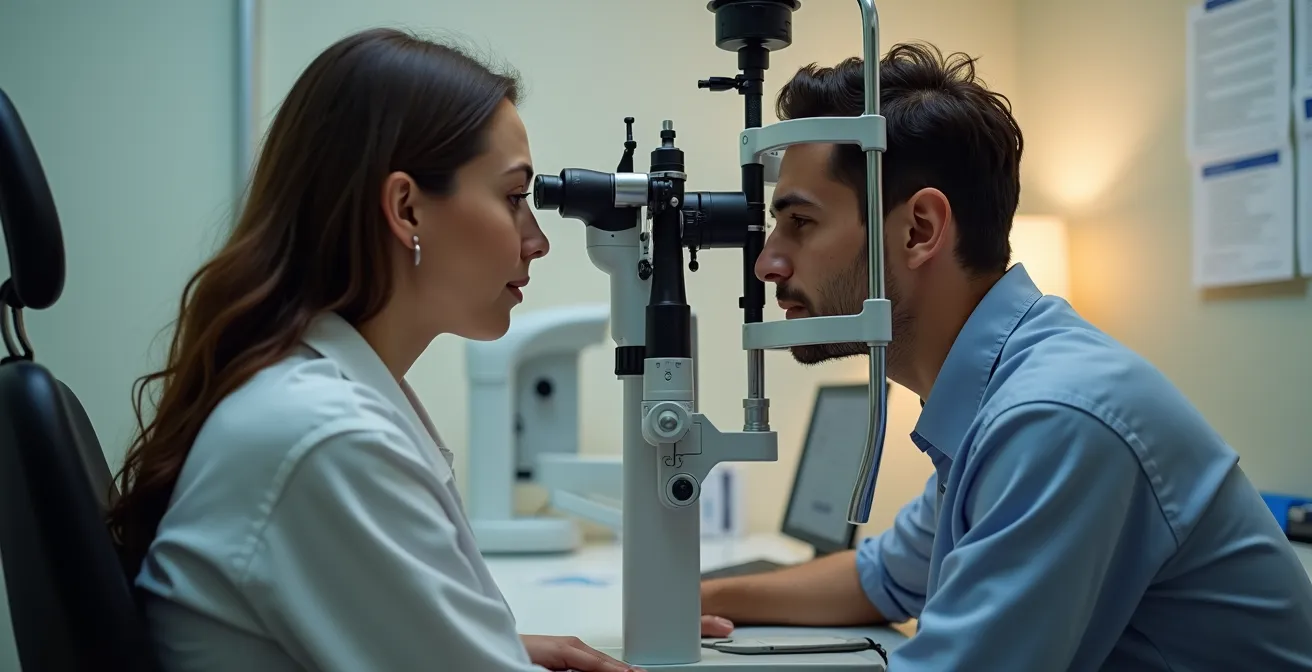
That question about your blood pressure medication may feel irrelevant during an eye exam, but it’s one of the most critical you’ll be asked. Your eyes offer a direct, non-invasive view of your blood vessels, making them a powerful diagnostic window into your overall cardiovascular health. This allows your eye doctor to spot the silent, systemic damage of hypertension long before it might otherwise be detected, turning a routine check-up into a vital screening for your heart, brain, and kidneys.
It’s a common moment of confusion in the exam room. You’re there to get a new prescription for your glasses, and the eye doctor asks, “Are you taking any medication for high blood pressure?” The question can feel abrupt, even intrusive. What could your heart possibly have to do with your vision? Many people assume that as long as they can see clearly, their eyes are fine, and that health issues like hypertension are the sole domain of their primary care physician. This perspective, however, misses a crucial and surprisingly direct connection.
The truth is, your ophthalmologist or optometrist isn’t being nosy. They are looking at the only place in the entire human body where the vascular system—your delicate network of arteries and veins—can be observed directly without a single incision. The back of your eye, the retina, is not just a screen that captures images; it is a high-resolution, real-time monitor of your systemic health. The changes they see there can be the first warning signs of a “microvascular drama” unfolding throughout your body.
But if the real issue isn’t blurry vision, what exactly is the danger? The answer lies in understanding that hypertension is a silent force that exerts mechanical stress on blood vessels everywhere. Instead of viewing your eye exam as an isolated event, this article will reframe it as a fundamental part of managing your total health. We will explore how your retina serves as a vascular blueprint, revealing the hidden story of your cardiovascular risks and why being transparent about your medications is not just helpful, but potentially life-saving.
This guide will walk you through the science behind this connection. We will examine what your doctor sees, the risks of uncontrolled pressure, and why your eyes truly are a window to the health of your heart, kidneys, and brain.
Summary: Why Your Eye Doctor Asks About Blood Pressure Medication?
- Why the Eye Is the Only Place We Can See Arteries Without Surgery?
- How to Tell if a “Popped Blood Vessel” Is a sign of High Blood Pressure?
- Hypertensive or Diabetic Changes: How Do They Look Different on the Retina?
- The “Eye Stroke” Risk: How Uncontrolled Pressure Blocks Retinal Veins
- Problem & Solution: Reducing Salt Intake to Lower Intraocular and Blood Pressure
- The Danger of Hiding Your Hypertension Medication From Your Eye Doctor
- Non-Proliferative or Proliferative: Which Stage Requires Laser Treatment?
- Why Your Eyes Are the Window to Your Heart, Kidney, and Brain Health?
Why the Eye Is the Only Place We Can See Arteries Without Surgery?
The eye’s unique status as a diagnostic window comes down to its anatomy. The retina, the light-sensitive tissue lining the back of your eye, is nourished by a complex network of tiny arteries and veins. When your eye doctor shines a bright light and looks through a lens, they are getting a magnified, real-time view of this “vascular blueprint.” This is the only part of the body where microcirculation can be directly visualized in its natural state. Everywhere else, blood vessels are hidden beneath layers of skin and tissue, inaccessible without imaging technology or surgery.
This direct view is invaluable because the health of these tiny retinal vessels is a direct reflection of the health of similar vessels throughout your body, including those in the heart, brain, and kidneys. If the retinal arteries show signs of narrowing, stiffening, or damage from high blood pressure, it’s a strong indication that the same processes are happening elsewhere. Chronic hypertension exerts constant force on the walls of these delicate vessels, causing them to thicken and harden over time.
As a foundational study from the Multi-Ethnic Study of Atherosclerosis (MESA) confirms, the characteristics of these vessels are tightly linked to major health risks. Researchers found that retinal arteriolar and venular caliber is associated with a range of cardiovascular risk factors, including hypertension, diabetes, and obesity. In essence, your eye doctor isn’t just checking your vision; they are performing a direct, non-invasive assessment of your cardiovascular risk profile.
How to Tell if a “Popped Blood Vessel” Is a sign of High Blood Pressure?
Many people have experienced a “popped blood vessel” in their eye—a bright, painless red spot on the white part of the eye, known as the sclera. This common condition, called a subconjunctival hemorrhage, is typically harmless. It occurs when a tiny vessel breaks just beneath the clear surface tissue of the eye. While it can look alarming, it’s akin to a simple bruise on the skin and usually resolves on its own without affecting vision. It can be caused by something as simple as coughing, sneezing, or minor trauma.
However, this is fundamentally different from the bleeding that signals a problem with high blood pressure. When an eye doctor refers to bleeding related to hypertension, they are talking about a retinal hemorrhage—bleeding that occurs deep inside the eye, on the light-sensitive retina itself. You cannot see this type of hemorrhage in a mirror. It is only visible during a dilated fundus exam, and it is a much more serious sign. It indicates that the pressure inside the vascular system has become high enough to damage the walls of the delicate retinal vessels, causing them to leak blood.
A retinal hemorrhage is a clear indicator of hypertensive retinopathy, a condition where chronic high blood pressure damages the retina’s blood supply. In severe cases, as seen in patients with Grade 3 or 4 hypertensive retinopathy, this can present with multiple hemorrhages, “cotton-wool spots” (small areas of nerve fiber damage), and swelling of the optic nerve. Unlike a harmless subconjunctival hemorrhage, these findings are a direct warning sign of significant, uncontrolled systemic disease that poses a threat not only to your vision but to your entire body.
Hypertensive or Diabetic Changes: How Do They Look Different on the Retina?
Hypertension and diabetes are two of the most common systemic diseases that manifest in the retina, but they create distinct patterns of damage. An experienced eye doctor can often differentiate between them, providing crucial clues about a patient’s underlying health. The core difference lies in the primary mechanism of injury: hypertension “squeezes” the vessels, while diabetes makes them “leaky.”
Hypertensive retinopathy is primarily a mechanical problem. The sustained high pressure causes the muscular walls of the retinal arteries to thicken and narrow. This leads to a classic sign known as “AV nicking” or “arteriovenous crossing changes,” where a stiffened, hardened artery compresses a softer vein at the point where they cross. Over time, the arteries can take on a “copper wire” or even “silver wire” appearance as their walls become so thick that they obscure the blood column inside. These changes are signs of long-standing, chronic pressure damage.
Diabetic retinopathy, on the other hand, is primarily a chemical problem. High blood sugar levels damage the delicate lining of the blood vessels (the endothelium), making them weak and prone to leaking. The hallmark sign of early diabetic retinopathy is the presence of microaneurysms—tiny, balloon-like outpouchings in the vessel walls. These weak spots can leak fluid, fats, and blood into the retina, leading to the formation of “hard exudates” (waxy yellow deposits) and retinal swelling (macular edema), which is a leading cause of vision loss in diabetics.
The following table, based on information from the American Academy of Ophthalmology’s Eyewiki, highlights the key differences your doctor looks for.
| Feature | Hypertensive Retinopathy | Diabetic Retinopathy |
|---|---|---|
| Primary damage type | Mechanical (vessel squeezing) | Chemical (vessel leaking) |
| Key signs | Arteriolar narrowing, copper/silver wiring | Microaneurysms, hard exudates |
| Cotton wool spots | Common (nerve fiber infarction) | Less common |
| Hard exudates | Less common | Common (lipid deposits from leaky vessels) |
While there is often overlap, this differentiation helps guide further medical investigation and management. Observing these signs can sometimes lead to the first diagnosis of either condition, underscoring the eye exam’s role in proactive healthcare, as detailed in a comparative analysis of retinopathy signs.
The “Eye Stroke” Risk: How Uncontrolled Pressure Blocks Retinal Veins
While gradual damage from hypertension is serious, there is a more immediate and devastating risk: an “eye stroke.” This event, known medically as a retinal vein occlusion (RVO), occurs when a vein in the retina becomes blocked, preventing blood from draining properly. This blockage causes blood and fluid to back up and leak into the retina, leading to sudden, often significant, and sometimes permanent vision loss. It is a true medical emergency for the eye.
Uncontrolled high blood pressure is a primary risk factor for RVO. The mechanism is directly related to the “AV nicking” seen in hypertensive retinopathy. As an artery hardens and thickens due to chronic hypertension, it can press down on the softer vein it crosses over. This constant compression can eventually lead to a clot forming in the vein, causing a complete blockage. As experts at the Review of Optometry explain, the sclerotic changes in vessel wall structure from chronic hypertension give arteries the potential to indent and obstruct the underlying venule at these crossing points.
The result is a sudden backup of pressure, much like a dam bursting. The retina becomes waterlogged and starved of oxygen, causing damage to the photoreceptor cells responsible for vision. Depending on which vein is blocked, an RVO can affect a small section of the visual field or, in the case of a central retinal vein occlusion (CRVO), the entire field of vision in that eye. While some vision may be recovered with prompt treatment, significant impairment is common. Therefore, any sudden change in vision should be treated as an emergency. Key warning signs include:
- Sudden dimming, blurring, or complete loss of vision in one eye.
- The appearance of new, significant blind spots or “floaters.”
- Any vision change accompanied by other systemic symptoms like chest pain or weakness.
An eye stroke is a dramatic and powerful demonstration of how systemic vascular disease can directly impact your sight. It underscores the urgency of managing blood pressure not just for long-term health, but to prevent acute, vision-threatening events.
Problem & Solution: Reducing Salt Intake to Lower Intraocular and Blood Pressure
The link between diet, particularly sodium intake, and systemic blood pressure is well-established. High levels of salt cause the body to retain water, increasing the volume of blood in the circulatory system and thus raising the pressure against artery walls. This same mechanism can also influence the pressure inside your eyes, known as intraocular pressure (IOP), which is a key risk factor for glaucoma. Therefore, managing your salt intake is a powerful, proactive step you can take to protect both your cardiovascular system and your vision.
One of the most effective dietary strategies is the DASH (Dietary Approaches to Stop Hypertension) diet. This eating plan emphasizes fruits, vegetables, whole grains, and low-fat dairy while limiting saturated fat, cholesterol, and sodium. Clinical trials consistently demonstrate its effectiveness, showing average reductions in systolic blood pressure of 1 to 13 mm Hg. When combined with a dedicated effort to reduce sodium, the effects are even more pronounced. Research shows that while a low-sodium diet and the DASH diet are effective on their own, their combined effect produces a significantly greater reduction in blood pressure than either approach alone.
Adopting a lower-sodium lifestyle doesn’t have to be about bland food. It’s about making smarter choices and retraining your palate. Processed foods, canned soups, fast food, and cured meats are major sources of hidden sodium. The key is to focus on fresh, whole foods and to use herbs, spices, citrus, and vinegar to add flavor instead of reaching for the salt shaker. By taking control of your diet, you are directly influencing the forces at play within your delicate vascular network.
Your 5-step plan to audit your sodium intake
- Track Your Intake: For three days, use a food diary or app to log everything you eat and drink. Be honest and specific, noting brands and portion sizes to get an accurate baseline of your current sodium consumption.
- Read Every Label: Spend a week focusing on the “Sodium” line on the Nutrition Facts panel of all packaged foods you buy. Identify your top 3-5 “high-sodium culprits” (e.g., bread, sauces, frozen meals).
- Cook from Scratch: Commit to preparing at least one meal a day entirely from fresh, unprocessed ingredients. This gives you complete control over the salt content and helps reset your taste buds.
- Swap for Flavor: Create a “flavor station” in your kitchen with salt-free alternatives. Stock it with garlic powder (not garlic salt), onion powder, paprika, dried herbs, black pepper, and various vinegars. Use these first.
- The Restaurant Rule: When eating out, make one specific request to lower sodium. Ask for sauces on the side, request that your food be prepared without added salt, or choose grilled items over fried or heavily sauced dishes.
The Danger of Hiding Your Hypertension Medication From Your Eye Doctor
For a patient who feels fine and sees clearly, omitting a medication from their health history can seem like a harmless shortcut. This is a dangerous misconception. Full transparency about your medications, especially for hypertension, is critical because of the risk of drug interactions between what you take systemically (orally) and what your eye doctor might prescribe topically (as eye drops).
A prime example involves a class of drugs known as beta-blockers. Oral beta-blockers are a common and effective treatment for high blood pressure. They work by slowing the heart rate and reducing the force of its contractions. However, topical beta-blockers are also one of the most common and effective treatments for glaucoma, a disease that damages the optic nerve and is often associated with high intraocular pressure. An eye doctor might prescribe these drops without knowing the patient is already on an oral version of the same drug class.

This creates a scenario of “double-dosing,” even though the medications are administered differently. The eye drops are absorbed into the bloodstream through the mucous membranes and can have systemic effects. As the BrightFocus Foundation warns, this overlap can lead to serious adverse effects:
Simultaneous use of both a systemic beta-blocker and a beta-blocker in eye drop form could potentially have unwanted side effects.
– BrightFocus Foundation, Blood Pressure and Glaucoma
These side effects can include a dangerously low heart rate (bradycardia), fatigue, dizziness, and shortness of breath. By withholding information about your hypertension medication, you prevent your eye doctor from making a safe and informed prescribing decision. They might choose a different class of glaucoma medication if they knew about the potential interaction. Your medication list is not just a formality; it is a crucial piece of the puzzle that ensures your treatment is both effective and safe.
Non-Proliferative or Proliferative: Which Stage Requires Laser Treatment?
When hypertensive or diabetic retinopathy progresses, it is categorized into stages based on severity. The two primary stages are non-proliferative and proliferative, and the distinction between them is critical as it determines the course of treatment. The key difference is whether the body has started to grow new, abnormal blood vessels.
Non-Proliferative Retinopathy (NPR) is the earlier stage. In this phase, the damage is contained within the existing vascular structure of the retina. The vessel walls become weak, leading to microaneurysms, retinal hemorrhages (bleeding), and exudates (leaking of fluid and fats). While NPR can cause vision problems, particularly if swelling affects the central part of the retina (the macula), the focus of management is on controlling the underlying systemic condition—blood pressure and/or blood sugar—to prevent progression. Regular monitoring is essential, but invasive treatments are not typically required.
Proliferative Retinopathy (PR) is the more advanced and vision-threatening stage. “Proliferative” refers to proliferation, or new growth. When the existing retinal vessels become so damaged that they can no longer supply adequate oxygen to the retina, the body triggers a desperate and flawed healing response: it grows new, fragile blood vessels in a process called neovascularization. These new vessels are weak, abnormal, and do not provide proper blood flow. They are prone to breaking and bleeding into the vitreous (the gel that fills the eye), which can cause sudden, severe vision loss. They can also form scar tissue that pulls on the retina, leading to a retinal detachment.
It is this proliferative stage that often requires laser treatment. The procedure, called pan-retinal photocoagulation (PRP), involves using a laser to create tiny burns in the peripheral retina. This destroys some of the oxygen-starved tissue, which reduces the signals calling for new blood vessel growth. While it sacrifices some peripheral vision, this treatment is crucial for saving the more important central vision by stopping the cycle of bleeding and scarring. This intervention is reserved for advanced disease to prevent catastrophic, irreversible blindness.
Key takeaways
- Your retina is the only place in the body where blood vessels can be seen directly without surgery, offering a real-time view of your cardiovascular health.
- A “popped blood vessel” on the eye’s surface is usually harmless; bleeding inside the retina is a serious sign of systemic disease.
- Hiding your medication list is dangerous, as oral blood pressure drugs can interact with topical eye drops (like beta-blockers for glaucoma), leading to adverse effects.
Why Your Eyes Are the Window to Your Heart, Kidney, and Brain Health?
The concept of the eye as a systemic mirror is not a metaphor; it is a clinical reality backed by extensive research. The health of the tiny vessels in your retina is a powerful predictor of future cardiovascular events. Because these vessels share the same structure and are subject to the same pressures as microvessels in other vital organs, the damage your eye doctor sees is a direct preview of silent damage occurring in your heart, kidneys, and brain.
For example, studies have definitively linked retinal vessel characteristics to the risk of stroke and heart disease. Research from the Cardiovascular Health Study found that individuals with wider retinal veins (a sign of circulatory stress) had a significantly increased risk of both coronary heart disease and stroke. This shows that the retina doesn’t just reflect current disease; it helps predict future events, providing a critical opportunity for early intervention.
This connection extends beyond the heart. The kidneys are also composed of a dense network of tiny blood vessels (glomeruli) that are susceptible to the same type of pressure damage. Signs of hypertensive retinopathy are therefore strongly associated with chronic kidney disease. Similarly, the brain’s health is tied to its vascular supply, and retinal changes have been linked to an increased risk of cognitive decline and dementia. The eye provides a consolidated, easily accessible view of a process that is happening body-wide.
Ultimately, the damage seen in the eye serves as a permanent marker of your cumulative vascular risk. It tells a story about your long-term health that even successful blood pressure control cannot erase. As leading experts have noted, the presence of this damage continues to signal a higher risk, regardless of current readings.
Hypertensive retinopathy remains associated with an increased risk of stroke, even after control of blood pressure and other vascular risk factors.
– Henderson et al., StatPearls – NCBI Bookshelf
That simple question from your eye doctor is an invitation to look deeper. It’s a chance to use the incredible diagnostic window of your eyes to protect your most vital organs and safeguard your health for years to come.
The next time you are in the exam chair, view that question not as an intrusion, but as an act of comprehensive care. Be a proactive partner in your health by providing a complete and accurate medical history. Your eyes have a story to tell about your heart, and your eye doctor is one of the best people to help you read it.